As our study abroad journey continues, we continue to progress through architectural history throughout Vienna. On this city as text assignment, we journey to several different social housing locations. These social housing projects were built during the Red Vienna period, which was a time of Vienna’s socialist period. A common theme amongst the municipal housing projects was the purposeful functionality of the buildings to ameliorate the lives of lower class citizens and how the rest of the city and how other social classes views these projects. One of the places we visited on our journey was the Amalienbad public swimming pool. Although it was designed as part of the social housing projects, it was intricately designed on the inside with mosaic tiles all along the floors and walls throughout the building. One common misconception that can be formed when you hear “social housing project” is that typically these types of developments are intended for use by lower class citizens. However, only after going on the tour at the Karl Marx Hof was I truly able to understand the historical importance of this building and the motivations of the government when designing these these complexes as part of these projects. I learned that the government would purposely design these buildings to be more elegant than other typical housing projects to make it seem more approachable to all classes, in addition to trying to make the architecture of these building fit in with the overall architecture of the city.
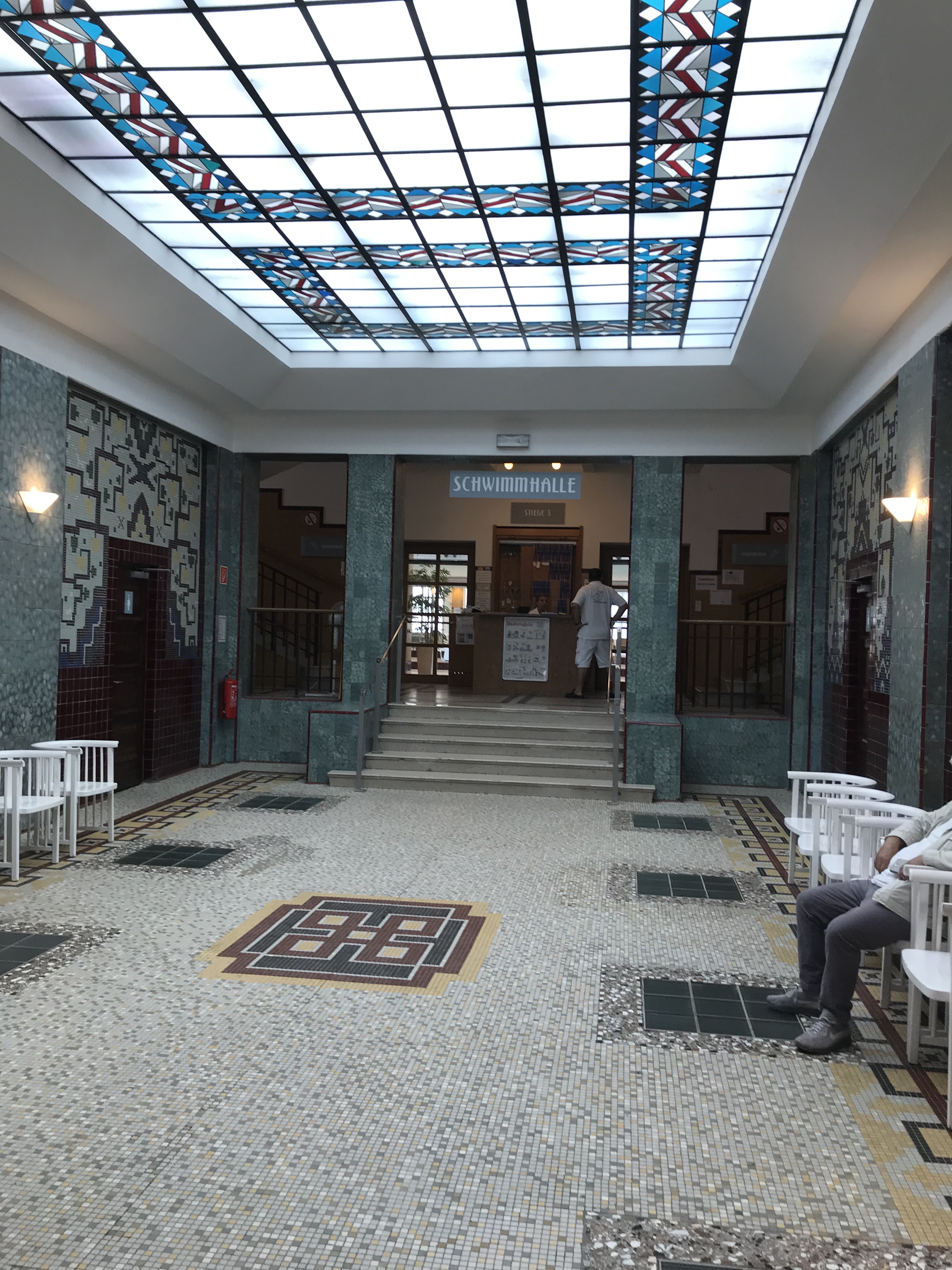
Continuing back to my experience at the public swimming pool, I had a short conversation with one of the ladies who worked at the desk reception there and I discovered that the building is over 100 years old. The respect that the public has for this building is apparent because I was also informed that they close the pool down every summer for one month to restore the place, and they restore each and every tile individually. Walking inside, it was oddly quiet, almost as though this was a place too be respected. This silence weighed on me and made me feel as though I should respect this place as well. This is important because during the Red Vienna period, this building was designed to be used by the public, specifically the lower class, but it was viewed by the rest of the population as almost derogatory. “Now regarded as a masterpiece it was derided at the time as an expensive folly and used by the embittered landlord class as an example of the wastefulness of the city’s socialist government,” (Clemoes). In addition, I find it interesting that this ideal had been constructed despite the numerous attempts by the government to make these projects seem more socially acceptable.
Overall, I believe that after visiting the Amalienbad swimming pool, in addition to the other housing projects listed for our CAT assignment, the stigma surrounding these projects and the negative preconceptions associated has dissipated since the period of Red Vienna. The sense of community involvement established at these housing projects in addition to a more elegant architectural design has helped to inspire an integration into Vienna’s cultural development.
Clemoes, Charlie. Vienna’s Social Housing Legacy: Rethinking Value, Failed Architect, 4 Aug. 2016, failedarchitecture.com/viennas-social-housing-legacy-rethinking-value/.
 Alyssa's Architectural Adventures