On this saga of our study abroad journey, we were tasked with the mission of traveling to two of the sites of London’s Bethlem Hospital, also known as Bedlam. The two buildings that had previous housed the mental hospital have since been repurposed for public use. However, I found it interesting that at both sites, its was hard to find information about the hospital that had once operated there, but even more so that there was a general lack of interest by the public in these sites. Our first stop for this CAT was at the Liverpool Street train station. Although this hub was teeming with people inside and out, I noticed that not a single person was particularly conscious of their surroundings. This could be due to the fact that the building was repurposed after the bedlam hospital had shut down. Although this is a contributing factor, I also feel as though the city of London’s attitude toward this building is what is driving the public’s lack of interest in the history of the building. Although we found the plaque on the outside of the building that indicated that the building was the first bedlam hospital, it was considerably difficult to find and it was placed on an obscure part of the building where there was little to no foot traffic.
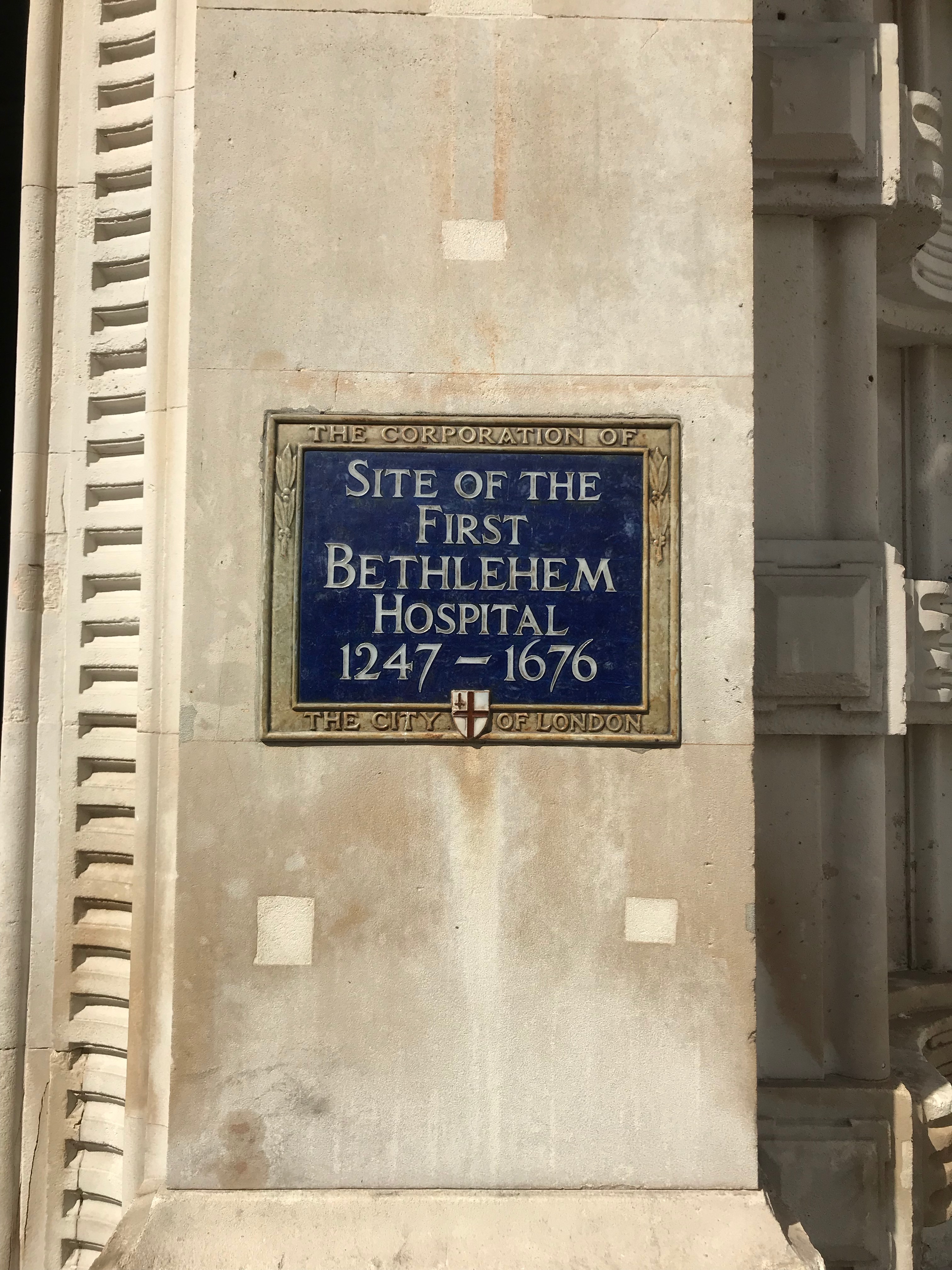
After searching extensively outside the entrances to the train station, we finally stumbled upon this plaque hidden around the corner behind an area where it appeared to house dumpsters.
In addition, although the original “shell” of the hospital still stands, the city did have to make the decision to renovate the building to fit it’s new purpose as a train station, and the city intentionally chose to conceal the history of this building based on how they went about that. First, a mental hospital typically has several hundred rooms and multiple floors, but looking inside the train station, there is no evidence of that; the train station was encased in this building but it was only contained on the ground floor and there was a clear view of the large vaulted ceilings that were ornately decorated. Also, when the city of London wants the public to acknowledge a certain historical aspect, it makes it apparent by building monuments or memorials to commemorate it. For example, I was walking through the Bank train station and I came across a monument in memorial of the people who died in that station during the Blitz. The city of London also did a good job of concealing the history of the building because they included modern additions to the building that contrasted with the historical architecture of the original bedlam so much so that the newer modern aspects of this building were more visually appealing than the original building.
I experienced a similar impression at the Imperial War Museum. Although this building was more closely preserved in its original state, its modern purpose as a museum and the park surrounding the building distracted from the original purpose.

The gardens surrounding the museum were filled with people sitting at a café, having a picnic or playing with their dogs, and there was an area filled with tennis and soccer courts where people were playing. 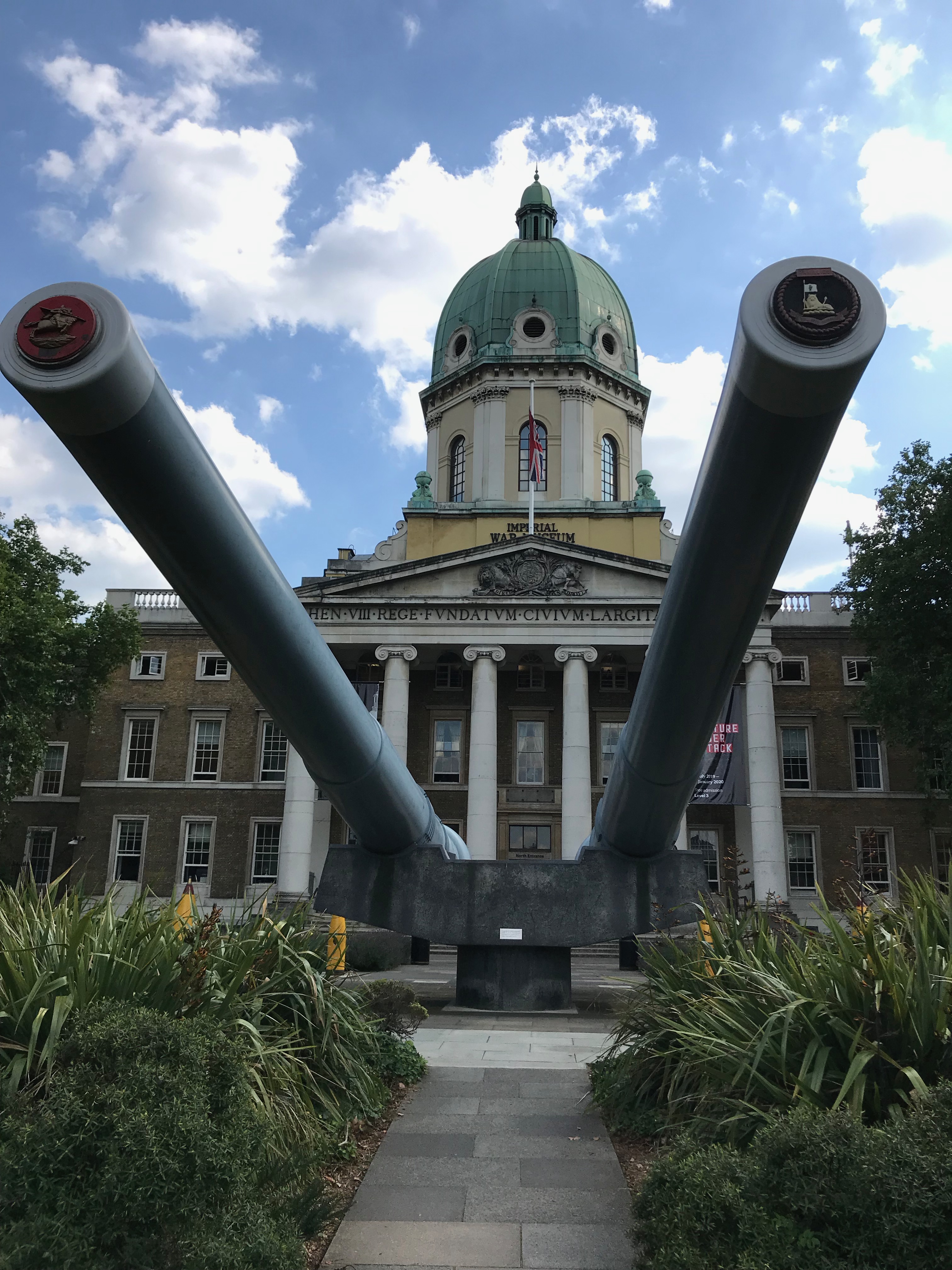
The front of the museum was transformed into a war monument; there was no obvious indication of Bethlem.
Again, we found only a small plaque that talked about the Bedlam hospital, and thinking that we would have found more, our group extensively walked all over the grounds in search of anything. In one of our class readings, the author brought up the possibility of the city itself inspiring madness is its citizens, and they begged the question “if the city itself were not a great madhouse, with all its afflicted and distracted, so that Bethlem became the epitome or little world of London,” and this brings up a valid point because throughout London’s history, the city and its people really have experienced a lot of trauma (Ackroyd 607). To continue from this, we discussed in our psychoanalysis class how these Bethlem hospitals were meant to help treat the people and help them feel better, so perhaps the city of London dismissed these places because Bethlem – a place where traumatic experiences were meant to be overcome – was not seen as a significantly traumatic enough place in comparison to several other locations in London and its pieces of history. On the other hand, London could just be ashamed of its history with bedlam and they purposely concealed this history from tourists in particular so that it would not give the people a negative perspective of the city. Even if this is the case, ‘the object is in the eye of the beholder’ and the reasoning behind the concealment of London’s bedlam history can be interpreted differently from person to person. I was disappointed to see this erasure by the city because no place/person/government/city is perfect and it still would have been interesting to learn about an aspect of London’s history that relates to our education.
Ackroyd, London: The Biography (607-612)
 Alyssa's Architectural Adventures