Be yourself; Everyone else is already taken.
— Oscar Wilde.
This is the first post on my new blog. I’m just getting this new blog going, so stay tuned for more. Subscribe below to get notified when I post new updates.
Be yourself; Everyone else is already taken.
— Oscar Wilde.
This is the first post on my new blog. I’m just getting this new blog going, so stay tuned for more. Subscribe below to get notified when I post new updates.
At the conclusion of our study abroad journey, it is only natural to reflect and reminisce on all that we have learned about 20th century Architecture and Psychoanalysis while pursuing an academic adventure of a lifetime through two of the most suitable cities to study such topics: Vienna and London. Although Architecture and Psychoanalysis are two vastly different subjects, there are certain aspects of each field we have studied that allow me to draw conclusions from my observations in a way that ties the two together. In particular, there was a continuous theme of each city trying to erase or conceal their historical sense of madness. But what really is madness, and how can certain historical aspects be considered “mad”? Like many other things, madness can be interpreted differently in the eye of the beholder, and in the case of these two separate cities, madness certainly encompasses separate meanings. It is also important to recognize that the differing historical backgrounds of both Vienna and London have an impact on how each city responds to their legacy with the subject. In other words, there are some similarities and differences between how each city uses methods to attempt to erase or conceal their involvement with madness or insanity.
The first destination we encountered on our journey was Vienna, a city that truly valued its history. I made this observation after departing from the city; not only did the city do an outstanding job of preserving its feats of architecture, but it was also careful to preserve non-visual elements of its history, particularly the legacy left by Sigmund Freud and his psychoanalytic breakthroughs. Because of this, Vienna’s legacy of madness is both straightforward and indirect based on different interpretations of madness and the various social situations that Vienna encountered throughout the 20th century. According to the Oxford Dictionary, madness has multiple definitions–the state of being mentally ill, extremely foolish behavior, or a state of frenzied or chaotic activity. Any of these definitions could apply to the circumstances of which Vienna has attempted erasure of madness.
The city of Vienna itself seemed remarkably pristine to me; the streets lacked careless litter, the Ringstrasse style buildings that encompassed the modernity of the city were preserved pristinely without even a scratch of graffiti in sight, and even the more recently developed public transit and traffic system seemed to operate flawlessly. Vienna appeared to be as close to perfection as a modern metropolis as such could get.
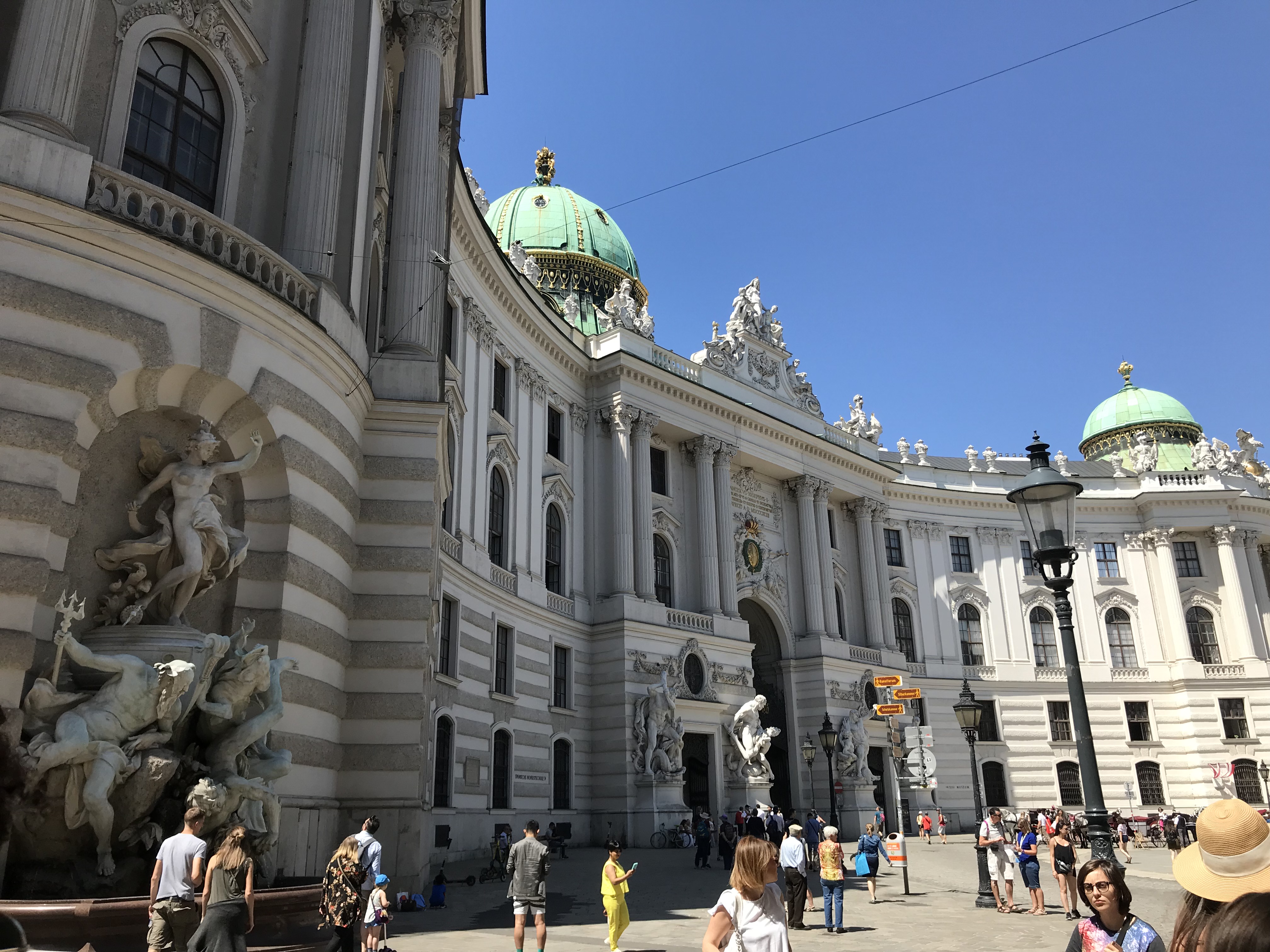
After studying one of the most revolutionary periods of Vienna’s history, I now know this is not the case; “Knowledge of cities is bound up with the deciphering of their dream-like expressive images,” (Frisby 18). The city has done an astonishing job of concealing all the madness that it has undergone through its transitions of history. One of the most tumultuous aspects of history throughout the 20th century across the world was the social and political changes. For Vienna, the entirety of the 20th century could be considered madness, since it was a period of chaotic or frenzied activity, as demonstrated in its political unrest.
Beginning as a monarchy, the shift to a republic of capitalism in the early 1900’s stirred a lot of social unrest as well, leading to the development of the Red Vienna period. Red Vienna served as a period of dynamic social movements to transform its capitalism and socialism; “Red Vienna, in other words, was a project to change society by changing the city,” (Blau). This society has done an excellent job of concealing the raw madness of its political and social history by using the city’s now picturesque fasçade to divert the public’s attention away from the things that give the city some character and respect.
Another example of the methods of erasure of madness in Vienna comes from those throughout the 1900’s who held the mindset that modern society was in decline, and those who most commonly held this mindset were artists, architects, psychiatrists, and the leaders of Vienna who governed the city and allowed the influence of these other people to affect Vienna and its citizens. Otto Wagner in particular was an architect who shared this mindset; Based on the readings of the Steinhof Psychiatric Hospital and what I learned on our vtour of the complex on our last day in Vienna, the hospital’s design was meant to embody the concept of a utopian vision for society, aside from the fact that it was also an attempt to reform the standards of treatment for the mentally ill. This is defended in Leslie Topp’s essay Otto Wagner and the Steinhof Psychiatric Hospital: Architecture as Misunderstanding when she argues that “the various asthetizing maneuvers employed by Wagner amounted to designing Steinhof (at least on a visual level) as an ideal community,” and it is important to note that “there was never any question of building Steinhof within the existing fabric of Vienna; physical separation was still deemed essential by the planners,” (Topp 150).
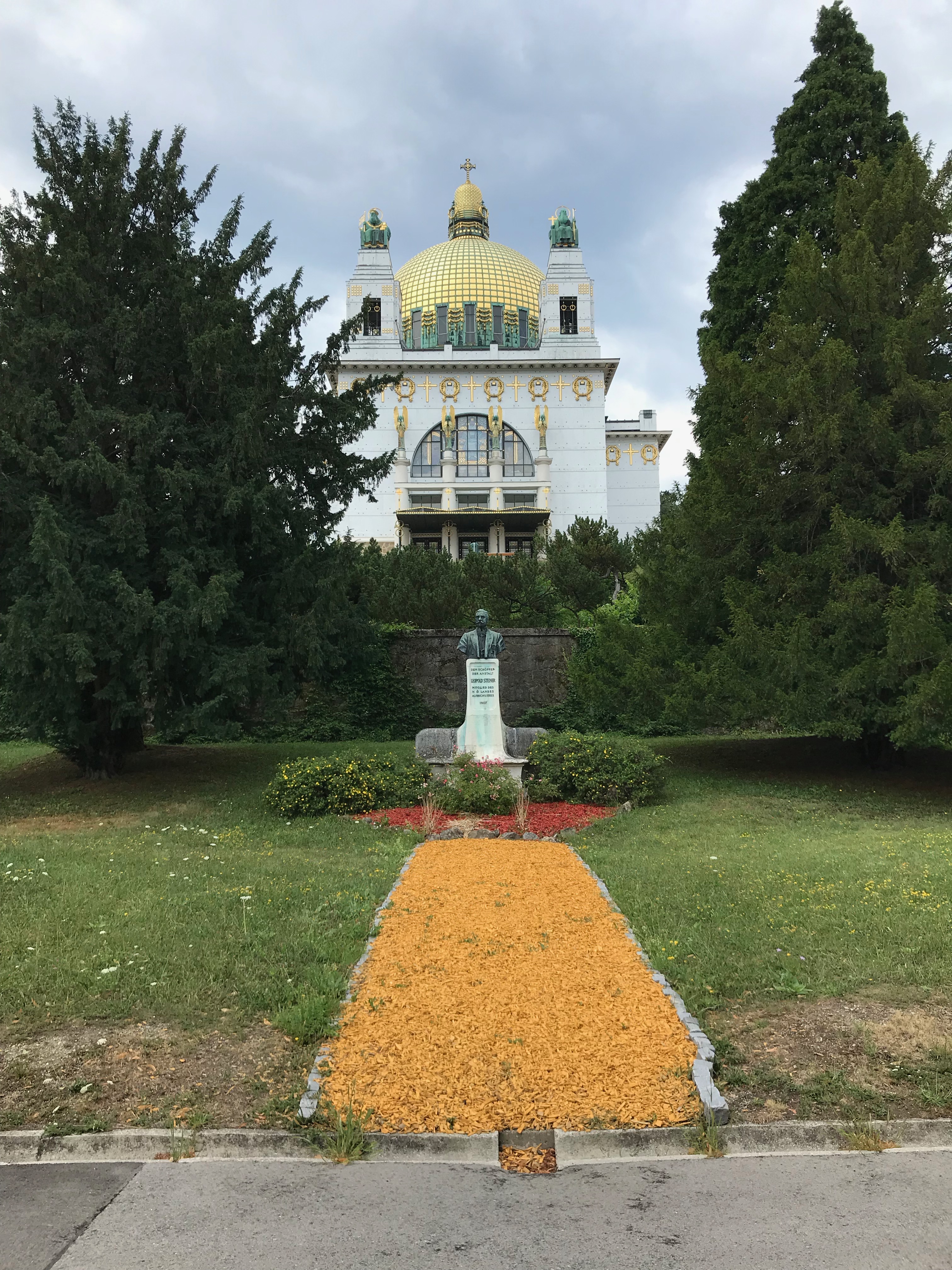
The location of the hospital continued to allow it to act as a segregated aspect of Vienna throughout the rest of the century and still into modern day. This location conveniently keeps the public and tourists away from the mental hospital, and if it weren’t for our mandatory visit as part of the program, I would never have even known that such a large complex existed there. It is because of this that I am able to discuss how the development of Steinhof can been seen as an active method of erasure of Vienna’s sense of madness.
Continuing my study abroad journey in London, I noticed similar patterns in regards to the city trying to conceal parts of its past that can be considered madness. Of the more literal sense, our exploration of the previous Bethlehem Hospitals left me feeling unsatisfied. All over the city I stumbled upon memorial after memorial; monuments commemorating the Great Fire of London, old church spires that stand erect without its steeples because of bombing from world war two, even a massive warship anchored in the middle of the thames river just to name a few. But traveling to the sites of these hospitals I hardly encountered a commemoration comparable to these.
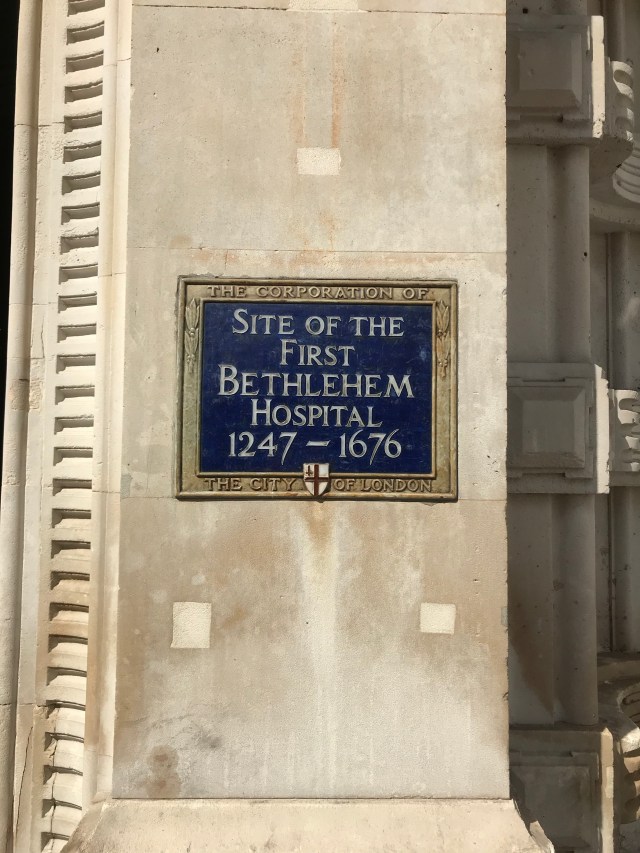
All that remained of the previous legacy of the buildings was a small plaque. I was astonished when I discovered this because even Vienna was able to recognize the horrors that occurred in the walls of its psychiatric hospital with a memorial for all the children tortured and murdered there during world war two. So many horrific things have happened within this city, yet London still could not even an explanation for the two Bedlam sites we visited.
In the Sigmund Freud museum we visited in London, our tour guide addressed how Freud was obsessed with archaeology and frequently connected aspects of archaeology to his practices. In particular, Freud had a massive collection of archaeological statues that closely resembled some parts of Egytian culture that symbolized death and burial. I connected this in a similar way to offer an explanation for the erasure of madness through the Bedlam sites; mental asylums typically hold a negative stigma in the public eye and this coupled with the possibility that some horrible things took place in those sites makes the city of London ashamed of this particular piece of its history. In fact, The Egytian statues sent a message to me that said “some things are better left buried”, ironic considering how Freud’s work involved engaging his patients in a piece of their history to help reverse the mental traumas of the patients.
This negative treatment of the mentally ill is depicted in the series of paintings The Rake’s Progress which we encountered on our visit to the John Soane’s museum. In one particular scene of the eight paintings, a man who was once wealthy is depicted as insane, chained to the wall of a mad house, and portrayed with an emaciated figure. However, our tour guide explained how in the same scene it is shown how the wealthy join to watch the insane as a type of entertainment, which was a typical thing in the 18th and 19th centuries. I was absolutely astonished when I heard this piece of information. How can normal people justify treating these mentally ill patients so horridly? What other kinds of tortures did these mentally ill patients have to endure? In one of our class readings titled London: The Biography, the historical tragedy of Bedlam is discussed but I was surprised to find out that by the late 17th century, London was the only city in the country that contained a madhouse and it was “in such a squalid and ruinous condition that it had become a civic scandal,” (Ackroyd 609). Given this tidbit of history, I am not surprised that London is ashamed of its history of Bedlam. The city was right to conceal Bedlam’s history, however I feel as though it is still an aspect of the city’s history that should not be completely forgotten because it shows how the character of the city has changed and developed over time, and that is something that should be praised, not erased.
Heading back to my hometown, a suburb of Chicago, after the conclusion of our study abroad journey I sought to encounter a similar aspect of Chicago history that the city has attempted to erase. I remembered how my grandpa used to talk about this place with such disdain and I decided to explore this part of Chicago’s legacy called “The Stockyards” formally titled The Union Stock Yard. The stockyards were a significant part of Chicago history, having a name that is comparable in notariety to Al Capone and Michael Jordan in its time. I soon learned that these stockyards shared a similar experience of erasure to the aspects we studied in Vienna and London.
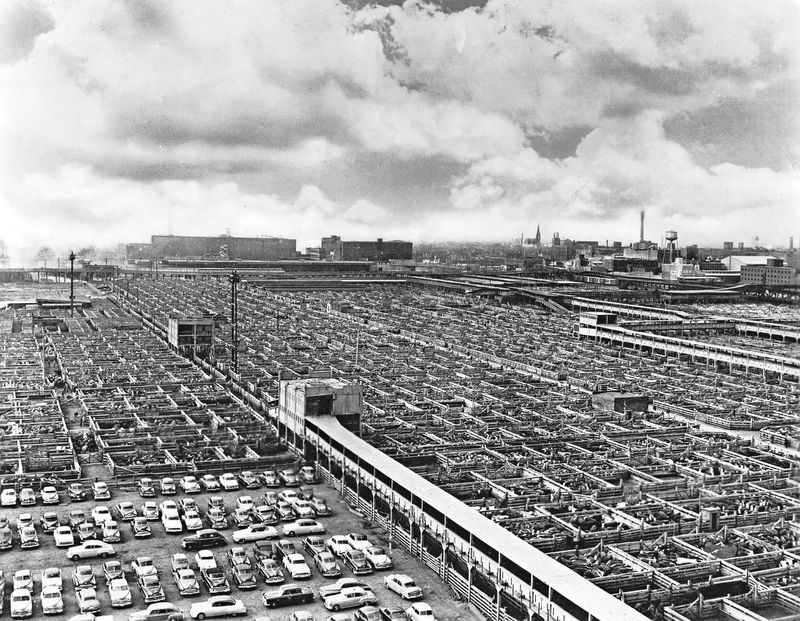
The history associated with this place was astonishingly gruesome. The yards opened on Christmas Day in 1865, operating for over a hundred years, closing its doors for good in 1971. These stockyards were considered to be one of the largest locations of the meatpacking industry in the world, and it “helped position Chicago as the center of the American meat industry,” (Then). Back in the 19th century, the meatpacking industry was easy to be integrated into as a new business because there was a lot of availability to make profits from overseas trading and the Chicago stockyard definitely capitalized on that. Profits were easily made for leaders in this industry because maintenance of these plants only relied on two things– cheap and available labor, and an absence of any sort of regulations in the industry. Much of the workforce was made up of fresh immigrants who settled in the Back of the Yards neighborhood, many parents enlisting their children to help stimulate more of a household income. Many of these kids were as young as eight years old (Sudo).
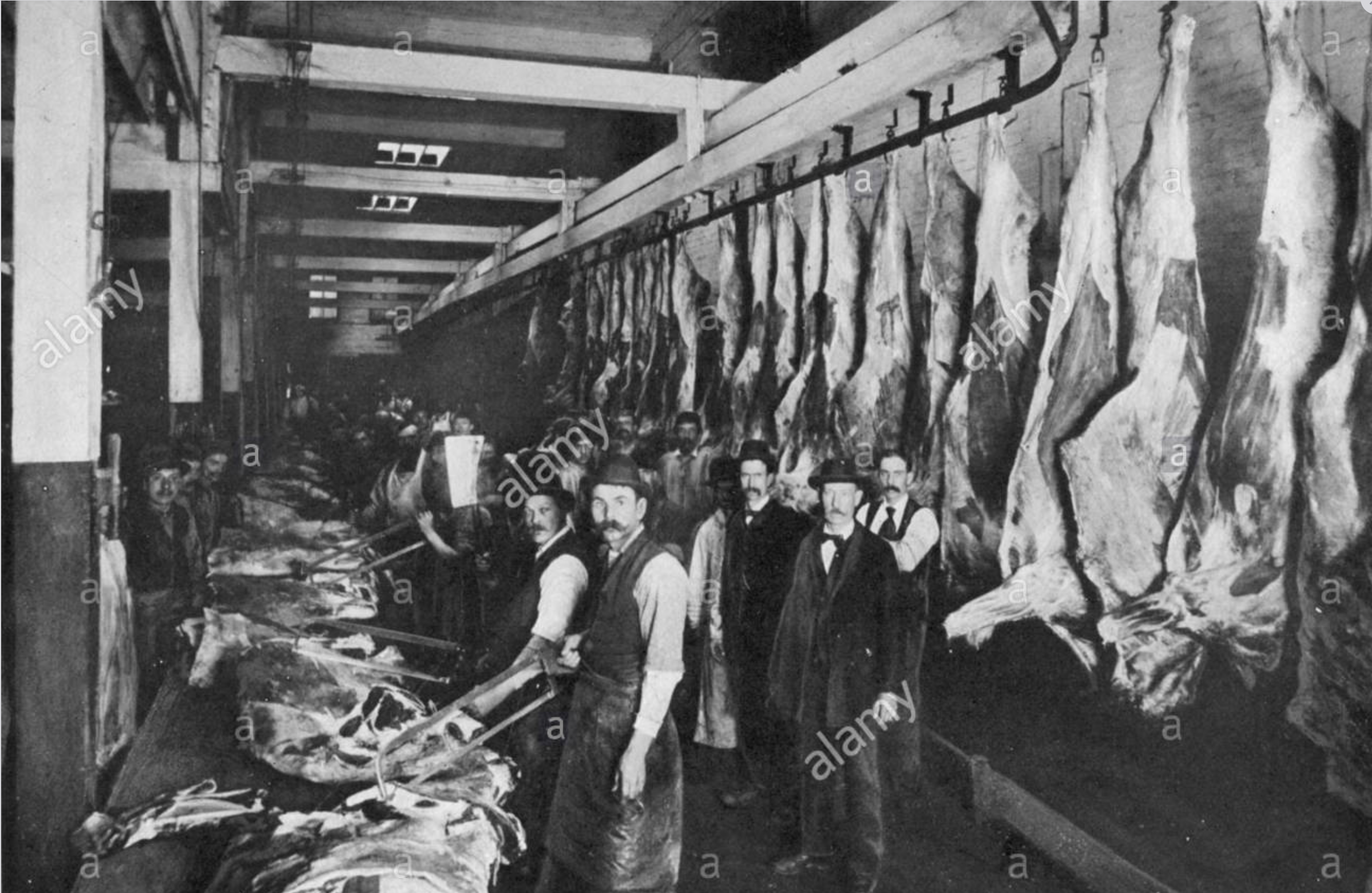
As the scale and size of the facilities of the meatpacking industry rapidly increased, so did the dangers associated with working there. Close to the turn of the 19th century, european markets refused to purchase imported American meat because our stockyards were known to be “filthy, and a breeding ground for diseased meat. Many of the meats were rancid, rat infested, and bacteria filled,” due to the fact that there were no guidelines or regulations for the workers regarding the quality control of the meats they were handling (Cornwell). One of the biggest concerns, however, was not the fear of rancid meat, it was whether or not the animal was already deceased before making its way to the processing plant, but obviously this was nott too much of a concern considering the industry did not start implementing regulations until halfway through the 20th century. Although this was horrifying enough, the stockyards also became a tourism spectacle where visitors were allowed “to view the killing floors and “disassembly lines,” (Then). Upon gaining knowledge of this information, I was astonished and ashamed to admit that this was apart of my city’s legacy, and I then understood why the city would attempt erasure of this information.
Making my way across the city of Chicago to find this place was a hectic journey. These stockyards were located near a fork of the south branch of the Chicago River, while I live in a northwest suburb about forty-five minutes outside the city. In order for me to reach the stockyards I had to travel clear across the city which required me sitting in traffic for about 2 1/2 hours but theoretically it should have been a short hour long journey. Nevertheless it was an interesting adventure as I always love driving through the city and seeing new places. From my previous research I learned that only lime stone gate of the stockyard remains, however what I experienced when I got there fell slightly short of my expectations. Although I was able to see the old limestone gate of the stockyards, I assumed there would have been a little bit of the original property still empty with the ghost of a few of the old stockyards building. This was not the case; literally all that was left to indicate any presence of the stockyards was that gate and a small courtyard with a memorial in it. I shouldn’t have been surprised by this though because even though the stockyards location was on the south side very near to downtown, the area surrounding it felt like a typical chicago suburb. Now, the majority of suburbs surrounding the city usually have an industrial sector which is home to delivery warehouses, many of which I encountered in the immediate area surrounding the gate. I was not very eager to wander far on foot though as the south side of Chicago is notorious for crime and is not a very well-off area, socially and economically. In other words, it was a sketchy part of town.
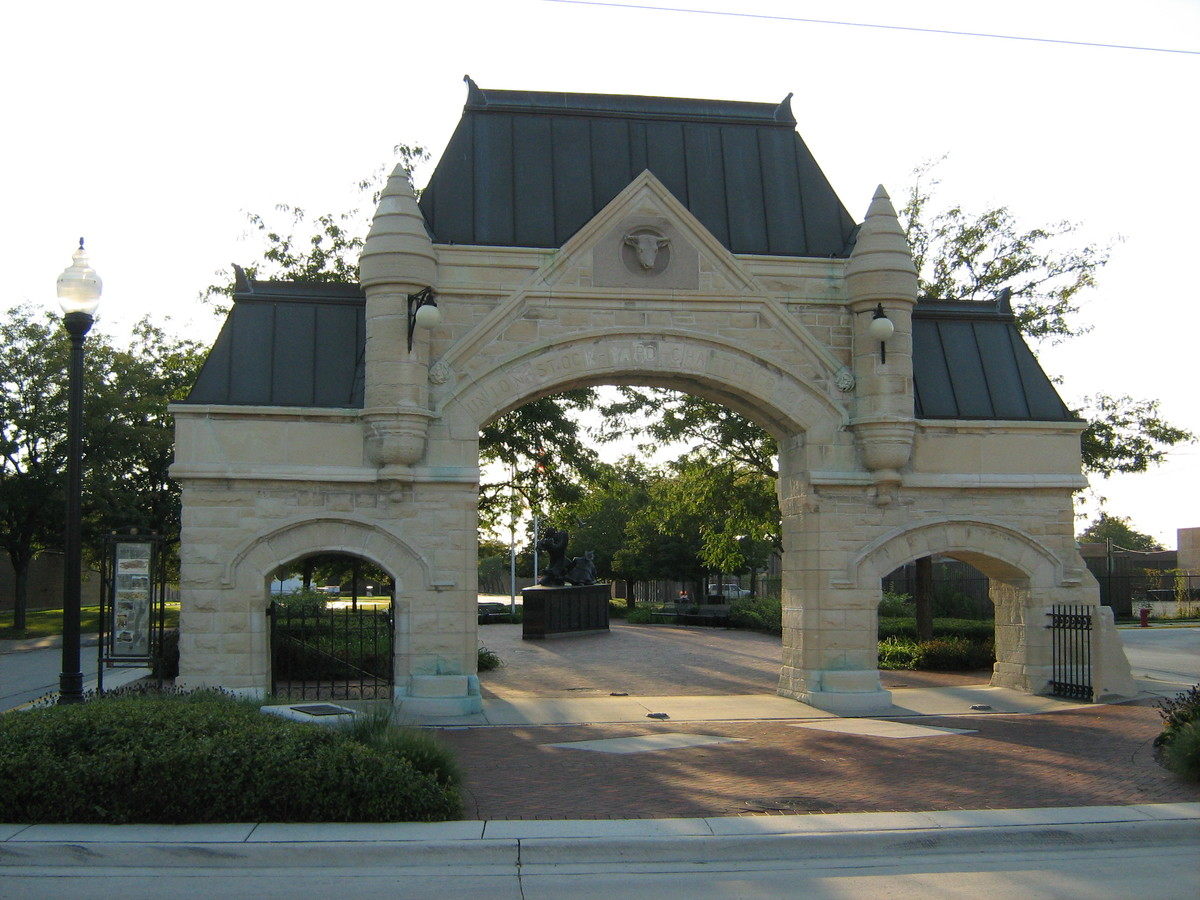
The gate sat directly in front of a railroad line, approximately two hundred feet away from it (surprisingly). I discovered later that the stockyards were developed in tandem with the railroads, which is what helped helped drive the rapid industrialization of the industry. Behind the gate there was a small courtyard/park of which I walked through in at most five minutes. The courtyard was essentially a few hundred square yards with some nice greenery and a few benches, very out of place for the area of town I was in. Sitting in this courtyard for even five minutes was eerie and quickly made me uncomfortable. The gate and courtyard appeared to house a small peaceful sanctuary, but considering it was situated in the heart of an industrial district, I encountered numerous semi-trucks and other traffic on the streets surrounding the monument. Directly behind the gate there was a memorial for all the firefighters who died while putting out fires at the Stockyards. I thought it was ironic how there was a memorial for these firefighters when there were several hundred, even thousands of people who died while working in the horrible conditions of the yards. This continues on with the theme of erasure that I encountered while abroad, although instead of Chicago concealing a history of madness, it was simply concealing a history of extreme abuse of factory workers.
Despite the horrid history of the stockyards and the erasure of the existence of the dominating meatpacking industry in Chicago, there are still people around today who would argue how working in the stockyards helped save their life. Although these people may have seen their job in the stockyards as a blessing, it was simply the industry taking advantage of all the cheap labor being freshly imported from overseas. In addition, Chicago was an immense trading hub constantly growing with immigrants because of opportunities to work in the trade market in some way or another. Because of the influx of immigrants heading to the city for opportunity, Chicago started to encounter issues with overpopulation of poor families in the heart of downtown. The convenient formation of the stockyards back in the 1870’s helped to segregate this issue by enticing the poor immigrants seeking work in the city to an area away from the heart of downtown. The Stockyard community that formed as a result was the residential area next to the stockyards, which was convenient because “It was close to the Chicago river, and only minutes from work, and the great majority of the workers lived in this dismal, loud, and overcrowded area,” but the most important part ways that living in the Back of the Yards was more affordable than living in downtown Chicago (Cornwell). However, living in the yards was just as glamorous as working in the yards. Meat Packing industry workers were constantly “surrounded by the city’s dumps. The garbage stench, and the smell from the vile waste of the meatpacking plants, that floated down the Chicago river, had to be overbearing,” and as a result of this and the vile conditions of the facttory, diseases quickly formed and spread, killing countless amounts of people (Cornwell).
This can be seen as yet another attempt of erasure by the city, except in this instance the city thought it was improving its image by concealing the lowest social classes by forcing them to the suburbs, a notion that is still present today. Also, although the city may have believed it had solved a problem by relocating lower classes to this south side neighborhood, it simply created a new legacy of poverty and lower class status, which is how the south side came to be as notorious as it is today.
Citations
Ackroyd, London: The Biography (607-612)
Blau, Eve. “Re-Visiting Red Vienna as an Urban Project.” Austrian Embassy Washington, Austrian Press & Information Service in the United States.
Cornwell, Allen. “Chicago 1900: Pickled Hands and Much Worse.” Our Great American Heritage, Sept. 2015.
Sudo, Chuck. “Dominic Pacyga traces Chicago stockyards history in ‘Slaughterhouse’.” The Chicago Tribune, Chicago Tribune, Nov. 2015.
Topp, Leslie, “Otto Wagner and the Steinhof Psychiatric Hospital: Architecture as Misunderstanding,” Art Bulletin 87, no. 1 (March 2005), 130-156.
“Then & Now: Union Stockyards – Chicago.” the herald-news.com, The Herald News, Jan. 2016.
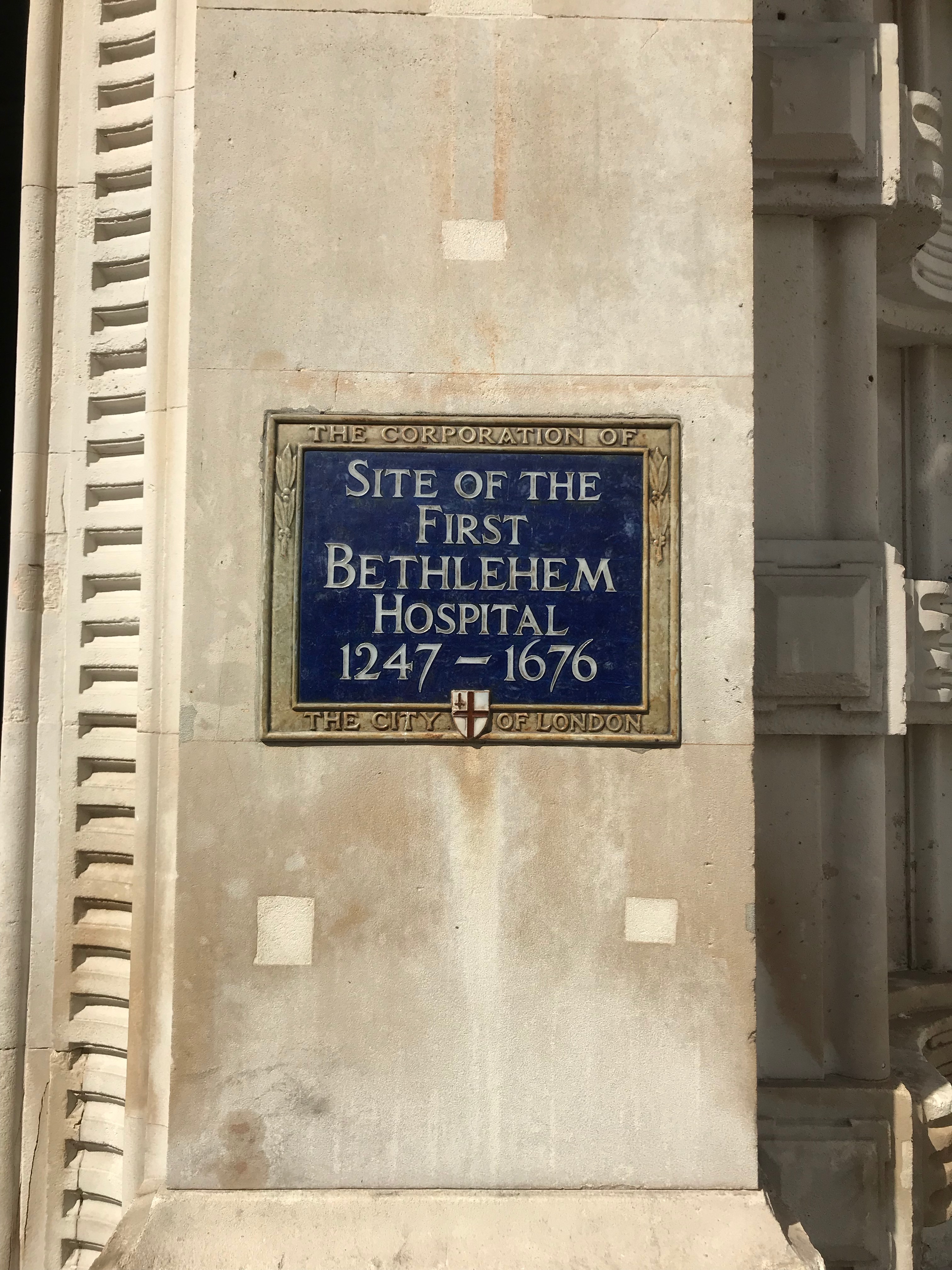
On this saga of our study abroad journey, we were tasked with the mission of traveling to two of the sites of London’s Bethlem Hospital, also known as Bedlam. The two buildings that had previous housed the mental hospital have since been repurposed for public use. However, I found it interesting that at both sites, its was hard to find information about the hospital that had once operated there, but even more so that there was a general lack of interest by the public in these sites. Our first stop for this CAT was at the Liverpool Street train station. Although this hub was teeming with people inside and out, I noticed that not a single person was particularly conscious of their surroundings. This could be due to the fact that the building was repurposed after the bedlam hospital had shut down. Although this is a contributing factor, I also feel as though the city of London’s attitude toward this building is what is driving the public’s lack of interest in the history of the building. Although we found the plaque on the outside of the building that indicated that the building was the first bedlam hospital, it was considerably difficult to find and it was placed on an obscure part of the building where there was little to no foot traffic.
In addition, although the original “shell” of the hospital still stands, the city did have to make the decision to renovate the building to fit it’s new purpose as a train station, and the city intentionally chose to conceal the history of this building based on how they went about that. First, a mental hospital typically has several hundred rooms and multiple floors, but looking inside the train station, there is no evidence of that; the train station was encased in this building but it was only contained on the ground floor and there was a clear view of the large vaulted ceilings that were ornately decorated. Also, when the city of London wants the public to acknowledge a certain historical aspect, it makes it apparent by building monuments or memorials to commemorate it. For example, I was walking through the Bank train station and I came across a monument in memorial of the people who died in that station during the Blitz. The city of London also did a good job of concealing the history of the building because they included modern additions to the building that contrasted with the historical architecture of the original bedlam so much so that the newer modern aspects of this building were more visually appealing than the original building.
I experienced a similar impression at the Imperial War Museum. Although this building was more closely preserved in its original state, its modern purpose as a museum and the park surrounding the building distracted from the original purpose.
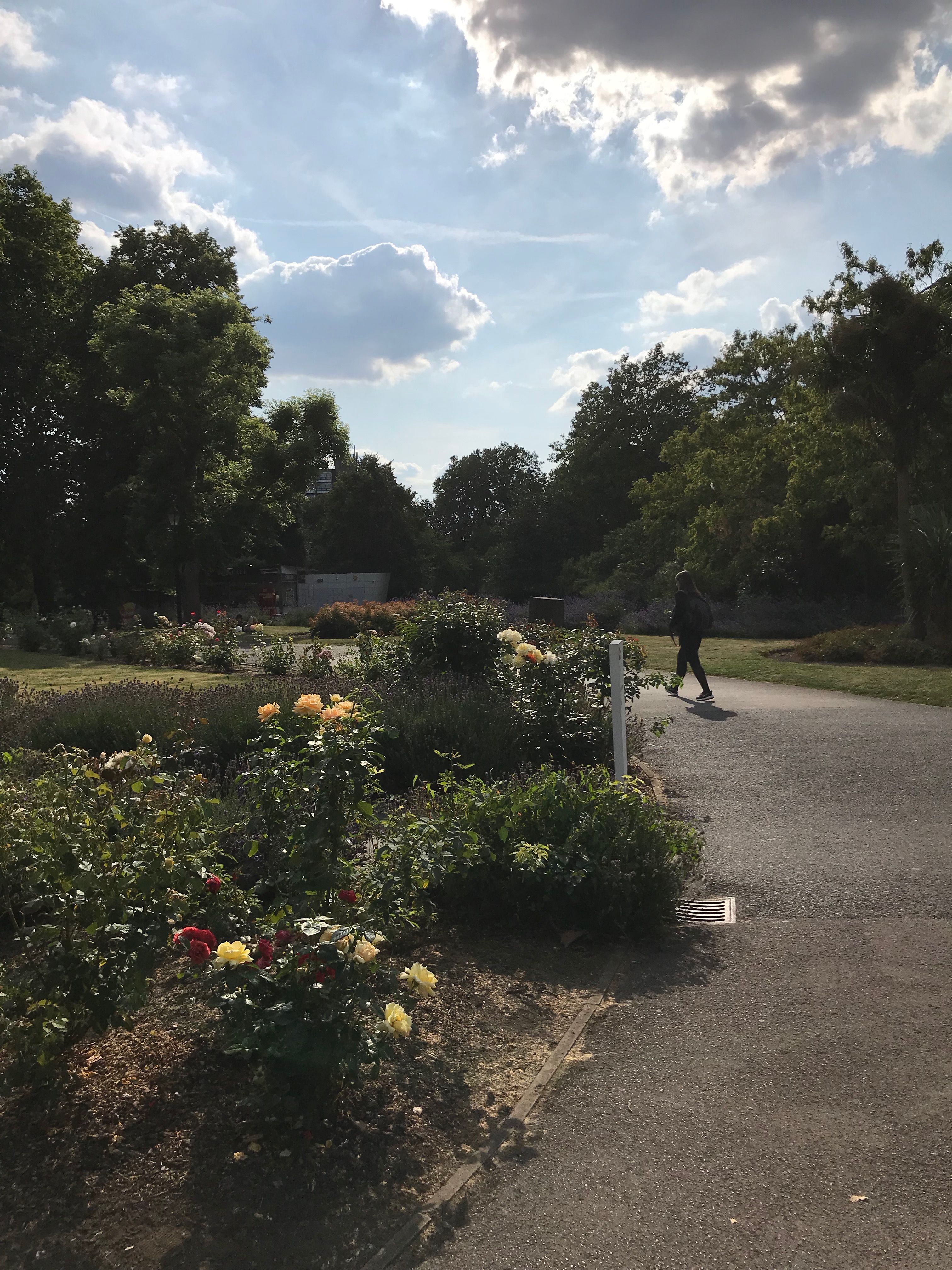
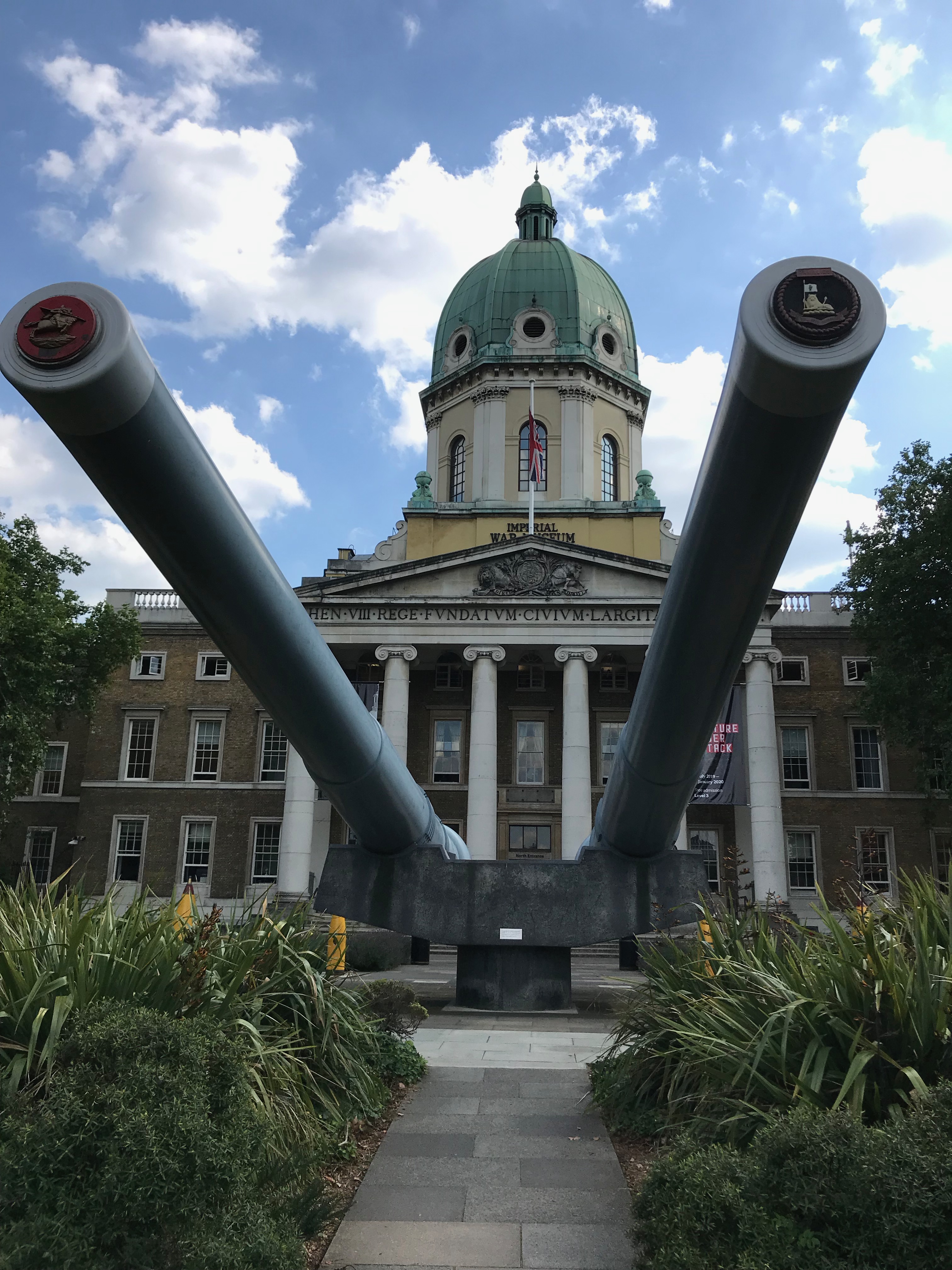
Again, we found only a small plaque that talked about the Bedlam hospital, and thinking that we would have found more, our group extensively walked all over the grounds in search of anything. In one of our class readings, the author brought up the possibility of the city itself inspiring madness is its citizens, and they begged the question “if the city itself were not a great madhouse, with all its afflicted and distracted, so that Bethlem became the epitome or little world of London,” and this brings up a valid point because throughout London’s history, the city and its people really have experienced a lot of trauma (Ackroyd 607). To continue from this, we discussed in our psychoanalysis class how these Bethlem hospitals were meant to help treat the people and help them feel better, so perhaps the city of London dismissed these places because Bethlem – a place where traumatic experiences were meant to be overcome – was not seen as a significantly traumatic enough place in comparison to several other locations in London and its pieces of history. On the other hand, London could just be ashamed of its history with bedlam and they purposely concealed this history from tourists in particular so that it would not give the people a negative perspective of the city. Even if this is the case, ‘the object is in the eye of the beholder’ and the reasoning behind the concealment of London’s bedlam history can be interpreted differently from person to person. I was disappointed to see this erasure by the city because no place/person/government/city is perfect and it still would have been interesting to learn about an aspect of London’s history that relates to our education.
Ackroyd, London: The Biography (607-612)
In this chapter of our study abroad journey, we completed our first City as Text assignment in London, a place with radically different architecture than what we experienced in Vienna. One of the most notable differences in architecture between the two cities (besides the lack of grandiose and intricately designed buildings in London) was the fact that buildings in London were designed purposely to cater to the public and to create a sense of community. This was evident to me in my trip to the Royal Festival Hall on the bank of the Thames. As my group and I approached the building, we found ourselves immersed in a “festival” outside the actual building. This festival was on the side overlooking the river, and it had attracted a rather large crowd of people. On one side of this festival area, there was a DJ playing music and interacting with the large gathering of children that were interested in dancing or just simply having a good time. I noticed this outdoor area was specifically designed for families due to the many attractions that were suited for children. However, there were also food stands and bars where parents or adults without children were hanging out.
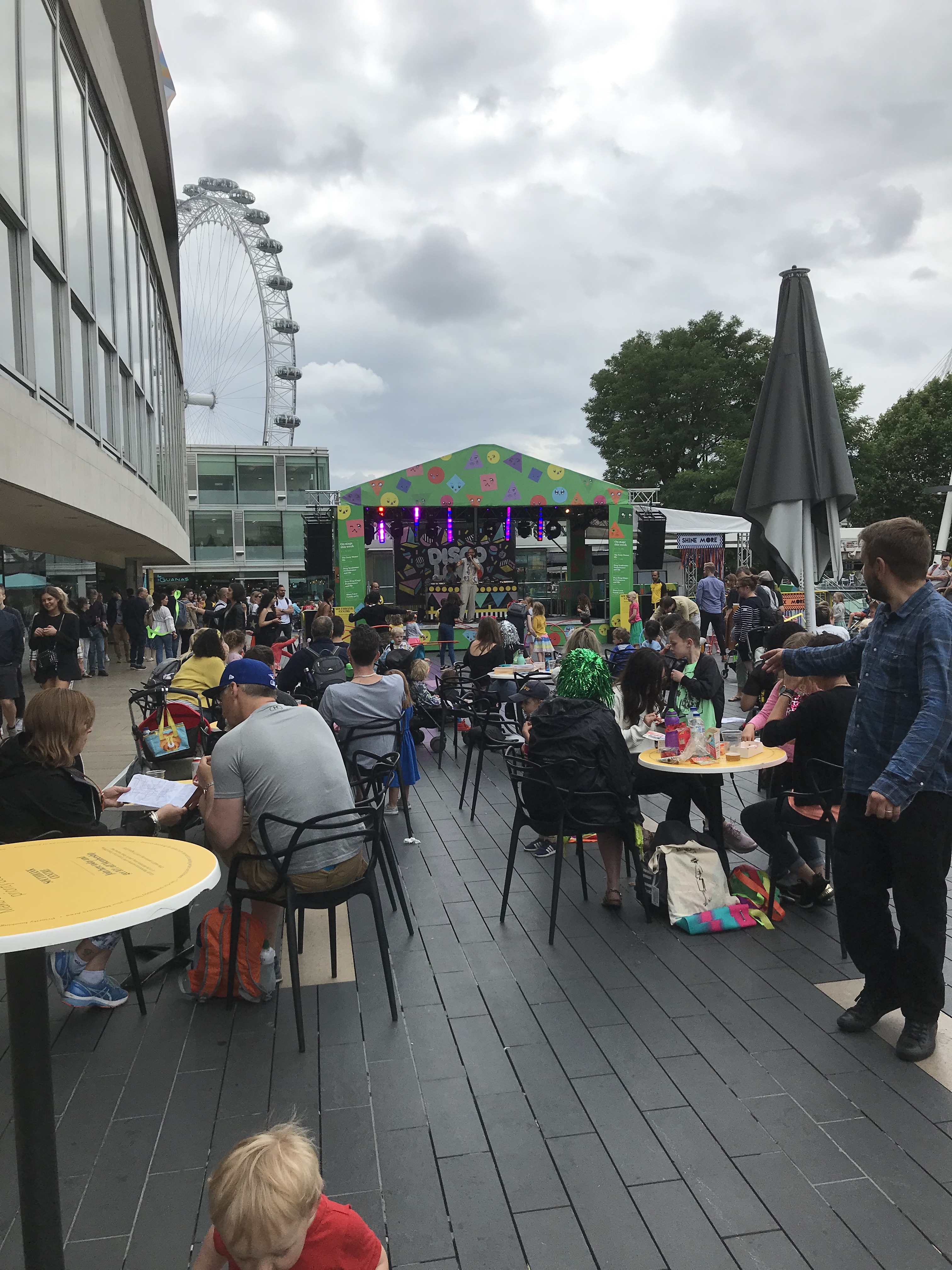
This outside festival of sorts cover the expanse of the entire building on the outside, and the further you walked down the more there was to discover. Skateparks, water fountain areas for kids to play in, restaurants and hidden garden cafes were amongst a few of the things my group and I stumbled upon while exploring outside the building. I thought it was interesting to note how the free-flowing dynamic of the festival on the bank of the river mirrored the open concept design of the Royal Hall itself. In addition, the festivities going on seemed to cater to every type of audience; young children and parents were easily amused here, but it was things like the skate park and the secret garden that really allowed people of all ages to be satisfied spending time there.
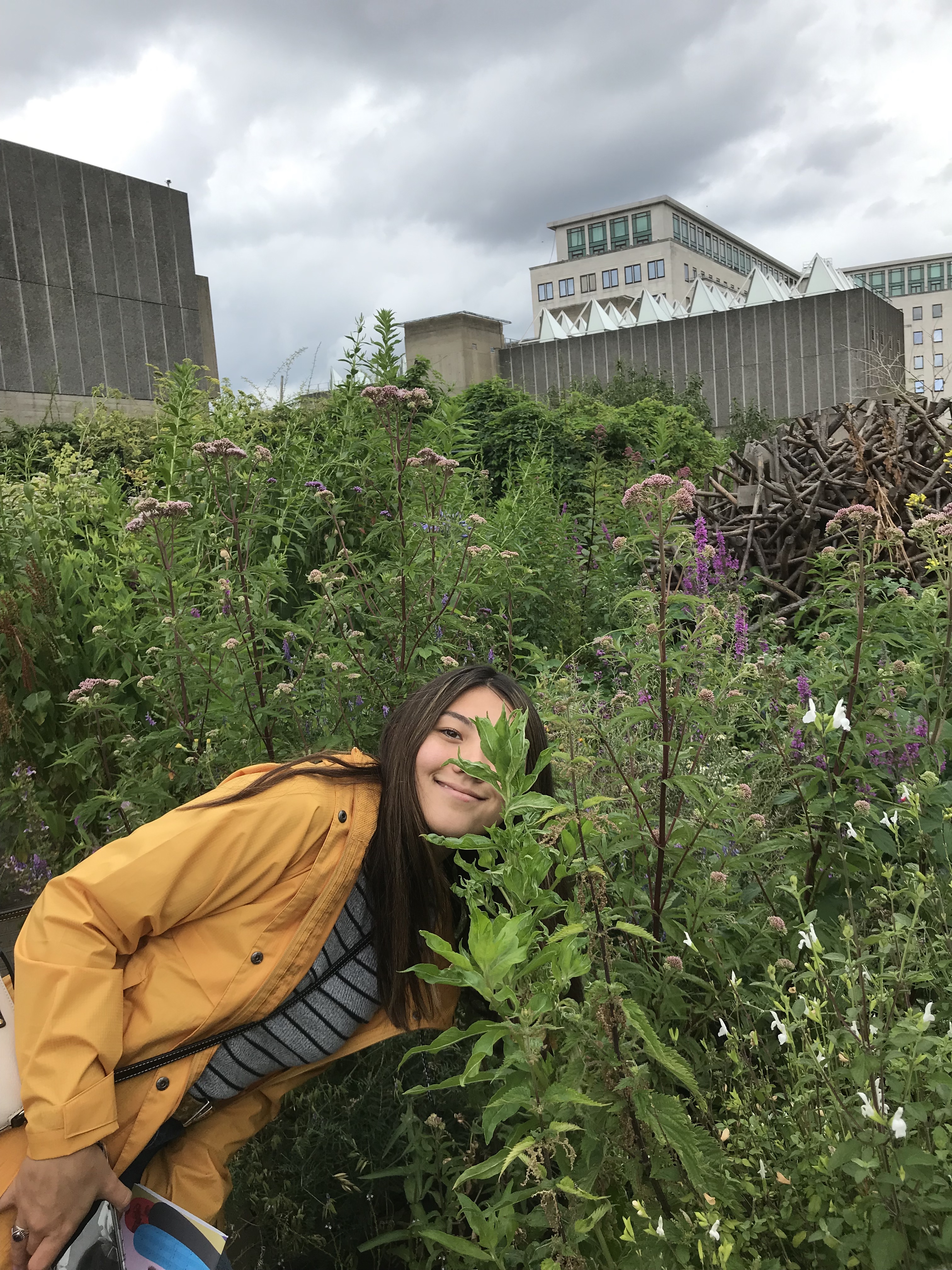
Walking inside the building offered many more opportunities for respite. The vast foyer was filled with more cafés, book and music stores and plenty of seating for people to enjoy their time spent there. There were probably about 5-7 floors of this building, but the lack of walls and vaulted ceilings allowed for almost every floor to be connected to the main foyer. To me, this indicated a sense of inclusiveness, a purposeful design that seemed to be meant to allow all aspects of this building to connect. This feeling of inclusiveness helps to inspire a sense of community because although this building has now been converted into a multi-purpose convention hall, it allows people to feel comfortable doing whatever they want there “without becoming the subject of some controlling interest…-there is no requirement to become a consumer, no obligation too follow a predetermined route through the building to some ultimate goal,” and given the fact that the inside housed a quiet ambience as well, there was certainly an inviting sense of comfort (Forty 230).
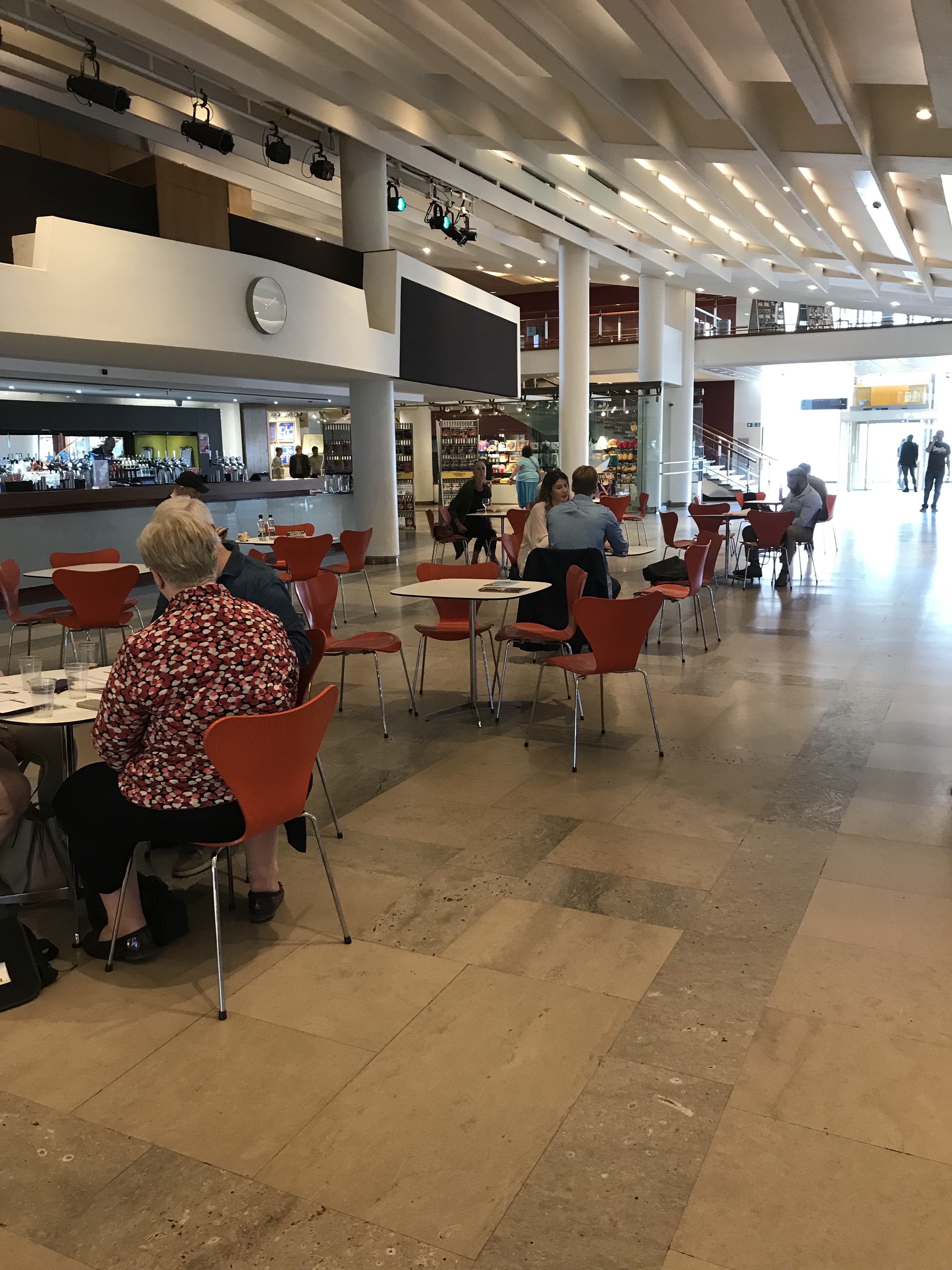
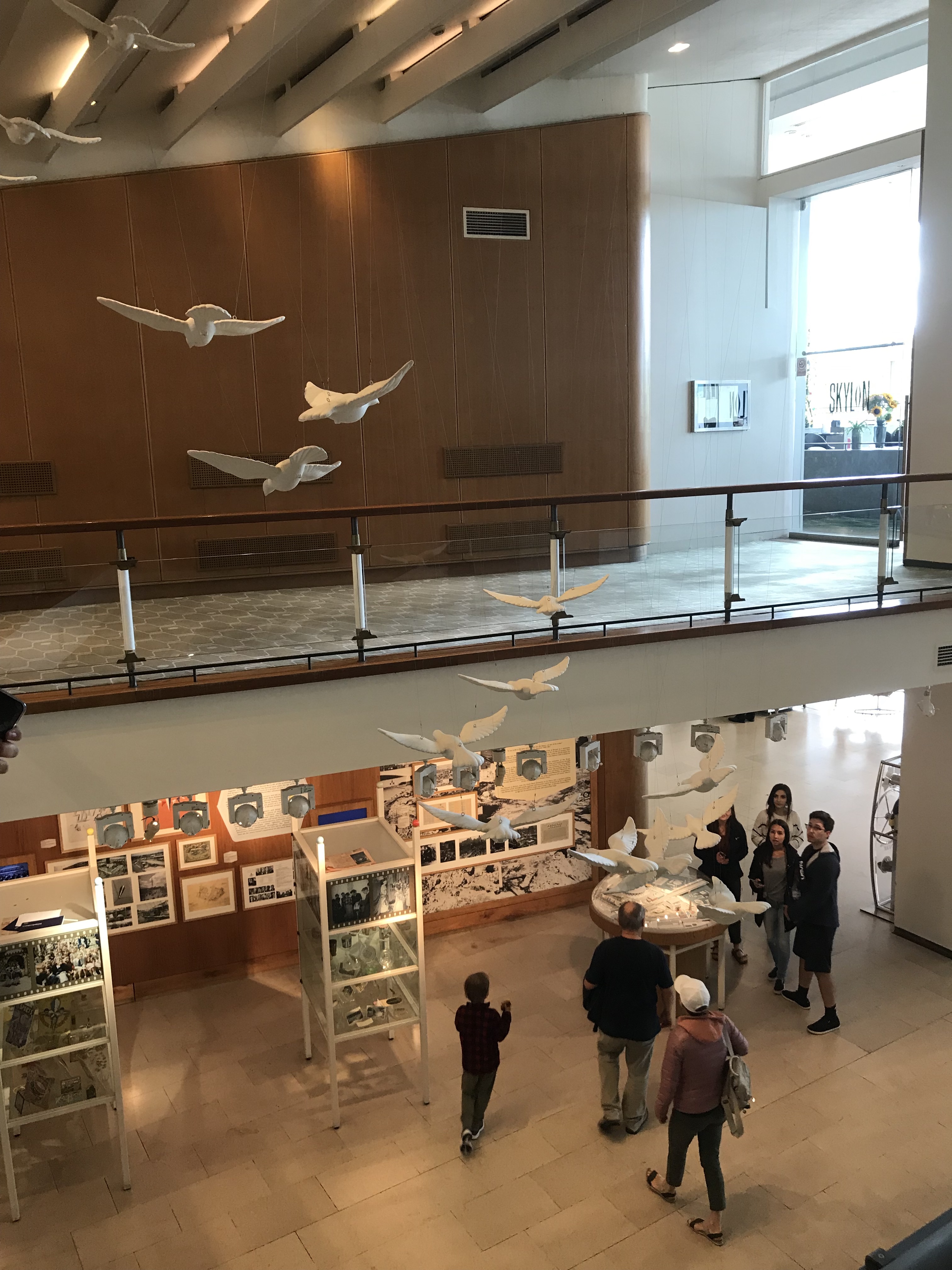
Although this building thrives on its “open to interpretation” function, it once used to be a concert hall. Knowing this information, I think this building would have been controversial at the time of its construction. In a concert hall, there are typically different sections of seating which usually is an indirect indication of the separation of classes between citizens. The open concept feel of the hall brings together people of different classes because everyone is having a similar experience, which again motivates a sense of community. However, Adrian Forty describes the sense of community that comes from the architecture of the building as democratic (232). Although I agree with this interpretation, I find this ironic considering Britain is a monarchy and the building was named The Royal Festival Hall. Considering this, you could argue that building a concert hall for the purpose of igniting a democratic feeling is a way for the citizens of London to express their desire for a political democracy as well. Trends in architecture like this continued as we also experienced this at the Barbican center. The Barbican center also did a good job of creating its own sense of community within its development, however my group experienced many difficulties when finding the complex and it was located in a less popular part of town which made this community feel more exclusive, as opposed to the Royal Festival Hall where the atmosphere was so inviting.
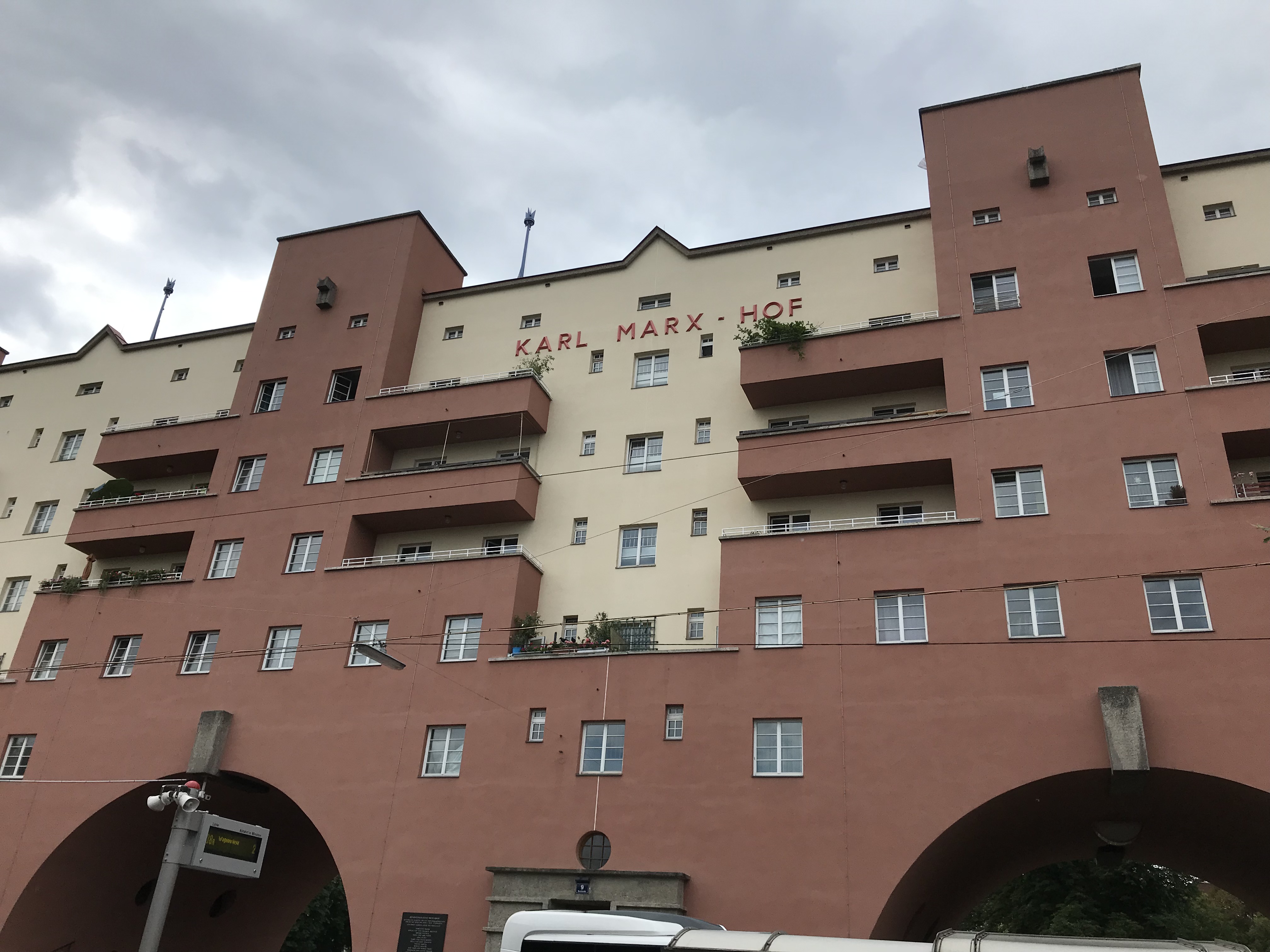
As our study abroad journey continues, we continue to progress through architectural history throughout Vienna. On this city as text assignment, we journey to several different social housing locations. These social housing projects were built during the Red Vienna period, which was a time of Vienna’s socialist period. A common theme amongst the municipal housing projects was the purposeful functionality of the buildings to ameliorate the lives of lower class citizens and how the rest of the city and how other social classes views these projects. One of the places we visited on our journey was the Amalienbad public swimming pool. Although it was designed as part of the social housing projects, it was intricately designed on the inside with mosaic tiles all along the floors and walls throughout the building. One common misconception that can be formed when you hear “social housing project” is that typically these types of developments are intended for use by lower class citizens. However, only after going on the tour at the Karl Marx Hof was I truly able to understand the historical importance of this building and the motivations of the government when designing these these complexes as part of these projects. I learned that the government would purposely design these buildings to be more elegant than other typical housing projects to make it seem more approachable to all classes, in addition to trying to make the architecture of these building fit in with the overall architecture of the city.
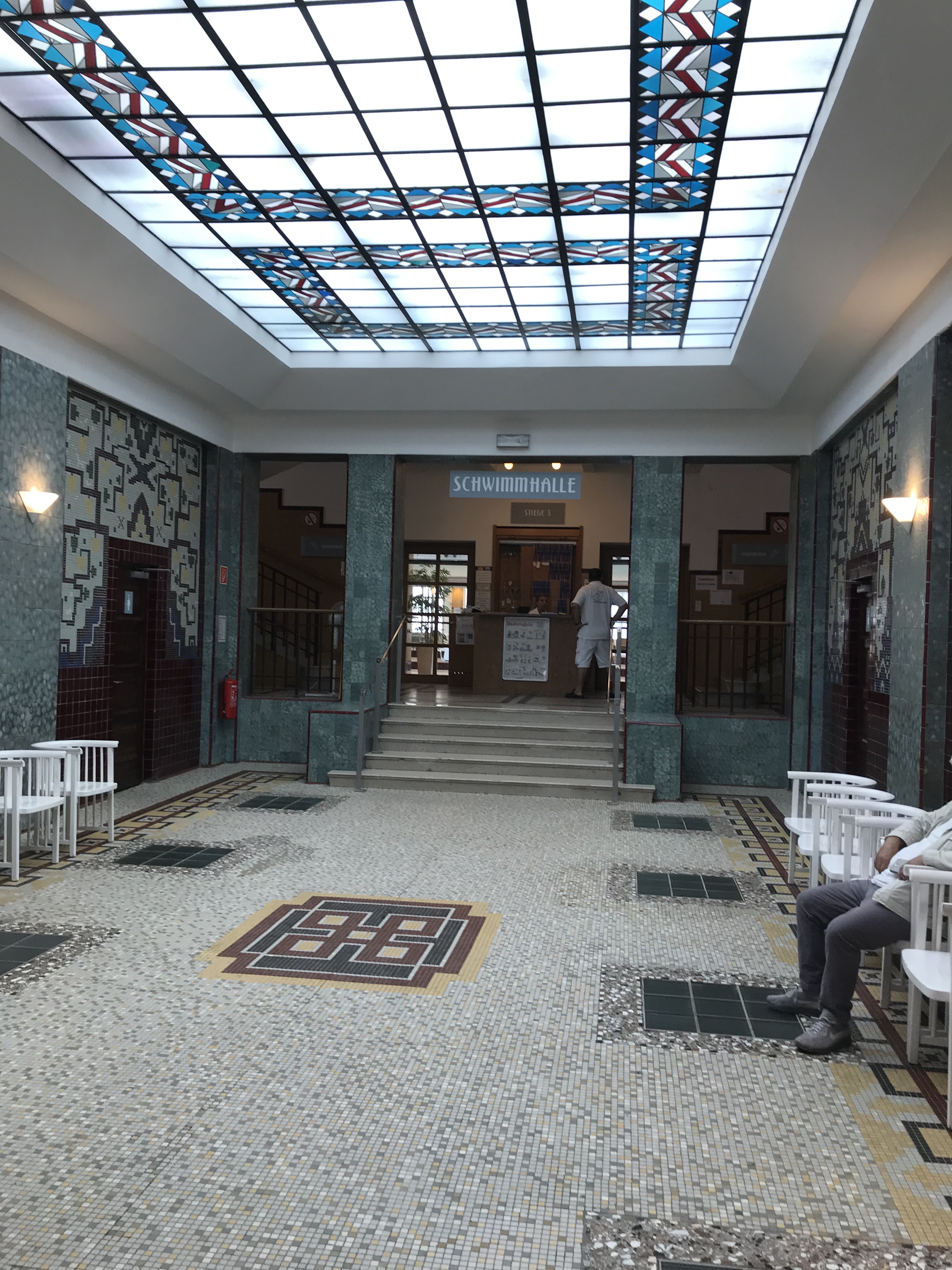
Continuing back to my experience at the public swimming pool, I had a short conversation with one of the ladies who worked at the desk reception there and I discovered that the building is over 100 years old. The respect that the public has for this building is apparent because I was also informed that they close the pool down every summer for one month to restore the place, and they restore each and every tile individually. Walking inside, it was oddly quiet, almost as though this was a place too be respected. This silence weighed on me and made me feel as though I should respect this place as well. This is important because during the Red Vienna period, this building was designed to be used by the public, specifically the lower class, but it was viewed by the rest of the population as almost derogatory. “Now regarded as a masterpiece it was derided at the time as an expensive folly and used by the embittered landlord class as an example of the wastefulness of the city’s socialist government,” (Clemoes). In addition, I find it interesting that this ideal had been constructed despite the numerous attempts by the government to make these projects seem more socially acceptable.
Overall, I believe that after visiting the Amalienbad swimming pool, in addition to the other housing projects listed for our CAT assignment, the stigma surrounding these projects and the negative preconceptions associated has dissipated since the period of Red Vienna. The sense of community involvement established at these housing projects in addition to a more elegant architectural design has helped to inspire an integration into Vienna’s cultural development.
Clemoes, Charlie. Vienna’s Social Housing Legacy: Rethinking Value, Failed Architect, 4 Aug. 2016, failedarchitecture.com/viennas-social-housing-legacy-rethinking-value/.
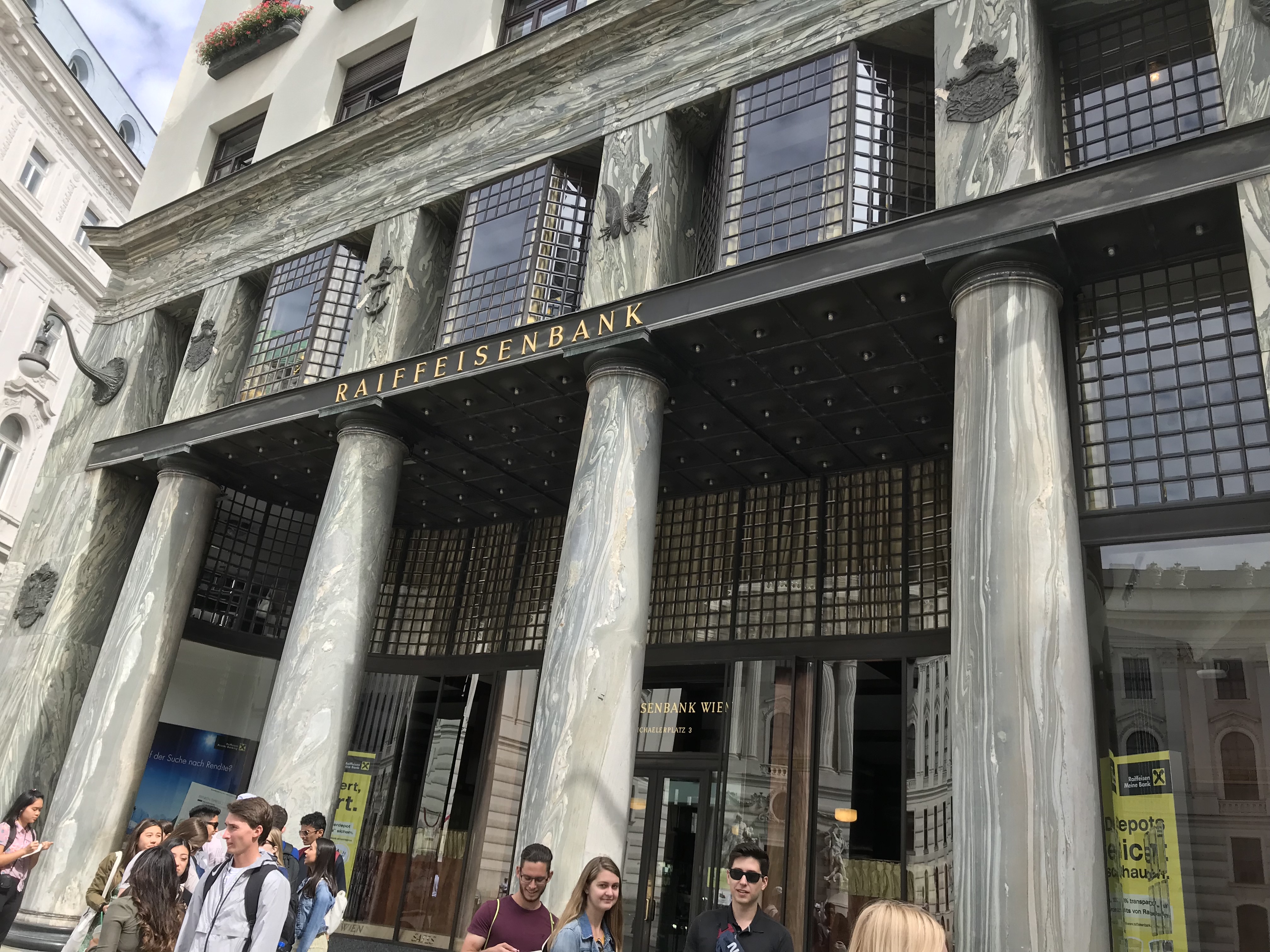
Continuing our study abroad journey, this second city as text assignment led us to some very interesting places. Many of these places had very gorgeous architectural design components while also providing the public with a purposeful functionality. One of the first places we visited was this upscale bank just outside of Stephaschplatz called Looshaus. The bank is actually located across the plaza from the Hofsburg palace, and is covered in dark grey marble stone. I was surprised by the exterior’s lack of intricate design that would have coordinated the building with the palace across the way. Walking inside, the interior was designed with dark mahogany wood and gold detailing with vast ceilings and a grand marble staircase in the rear center of the main room. Everything about this place seemed high class, and after a short conversation with one of the interns there, we even discovered there was an art gallery inside of it. The intern also informed us that the bank was mainly used by upper class people, and they had special services that would cater to those in good financial conditions. Based on the simplicity of the architectural design of the building, it seems this bank was meant to serve the purpose of simply being a bank. One could also argue that the dressed-down design was intended to attract and invite people of all classes, however the ambience inside gives off an air of wealth and class. Perhaps this is why there were not many people inside the bank besides its employees.
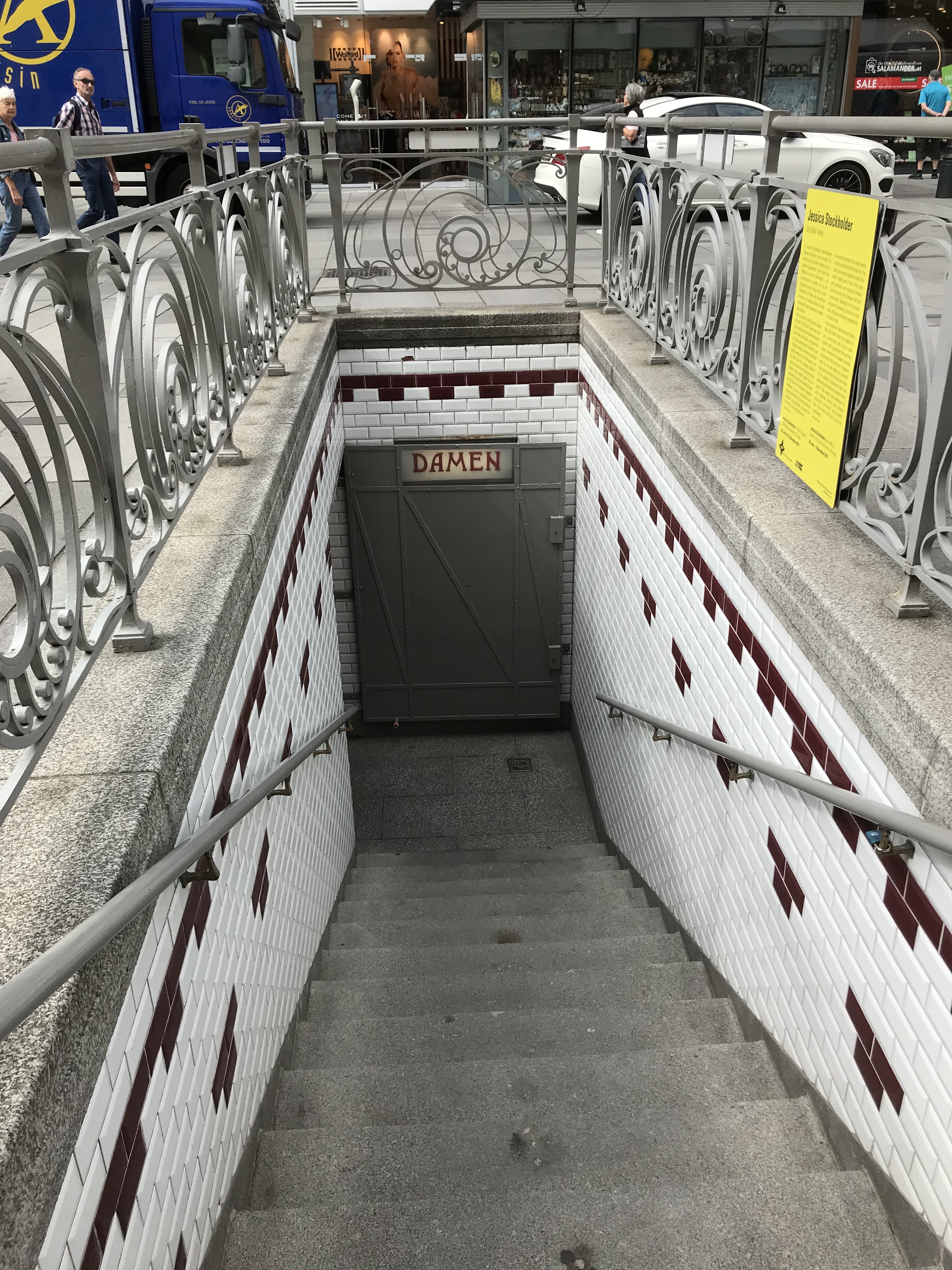
To continue our fieldwork assignment, a short walk back into Stephaschplatz led us to an underground water closet designed by the same architect as the bank. Although this was clearly no ordinary bathroom, with the inside again designed in mahogany wood and gold details, it was also simplistically designed. This bathroom is another example of of how this architect wanted his designed buildings to serve a purpose for people of all classes. This bathroom is still unique enough to be considered classy, however it is a public toilet in the middle of the city center and anyone can realistically use this bathroom for a small fee of fifty euro-cents.
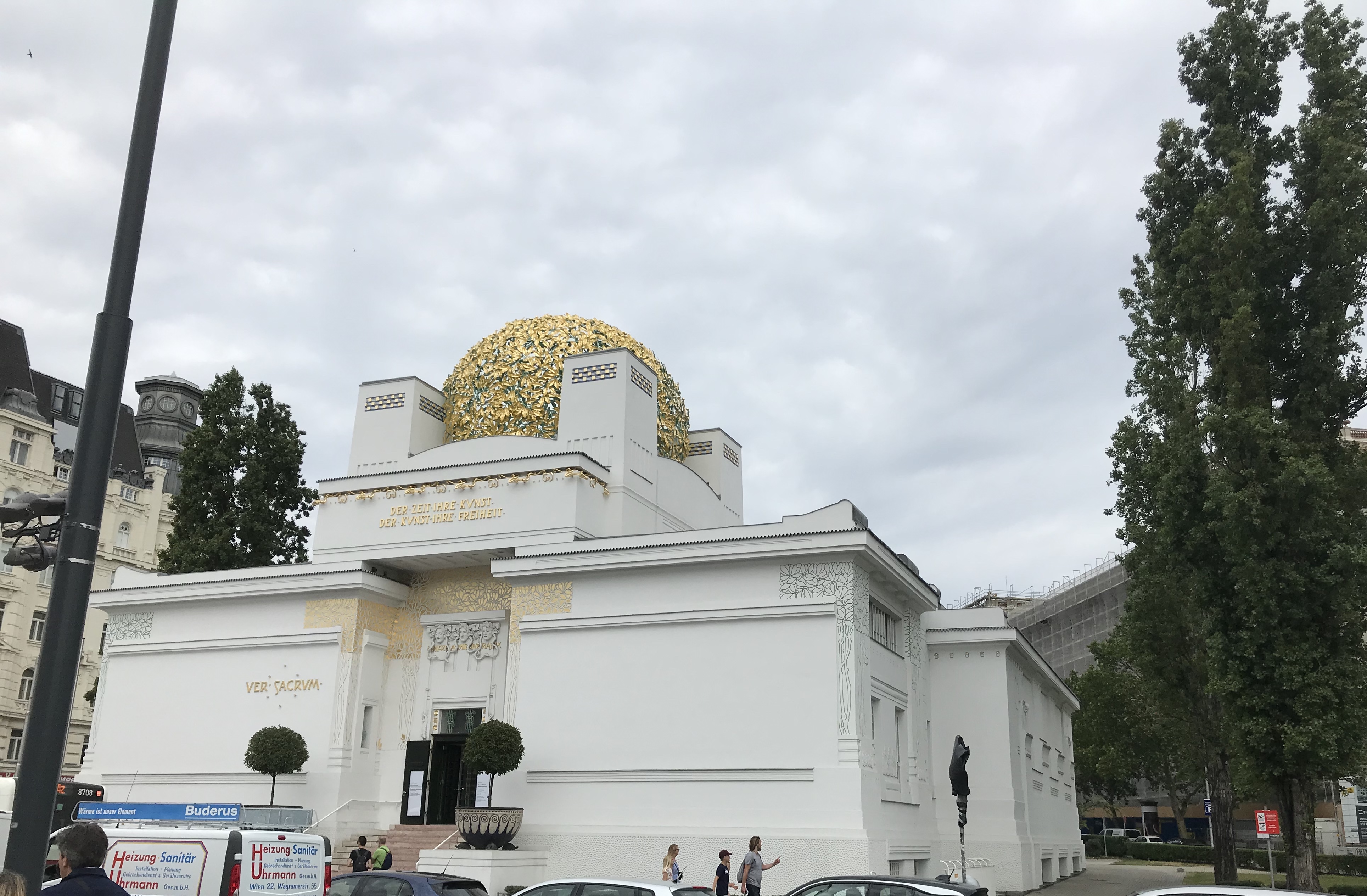
In addition to the other structures we encountered by Stephaschplatz, my group and I directed our attention to the Secession building. This building was designed by an artist of the secession, which can explain why this building’s style looks so foreign in comparison to those around it, keeping with the secessions theme of nouveau and different styles of art. Observing the surrounding area, there were not many pedestrians walking around and there actually seemed to be more vehicle traffic than foot traffic. This rather simplistic building was design to be an art gallery for the artists of the secession, understandably so considering that the inside of the building was not decorated at all. Its design was meant to be a blank slate for these artists and today it still serves this function. Our group took a moment to walk through and admire the art gallery before completing the CAT assignment while we remarked about how this was the perfect little art gallery for those rebellious artists of the secession.
Our first City as Text assignment led us to some really beautiful architectural sites around Vienna city that left some impactful impressions. After a small debriefing from our professors, a few other students and I headed out for the day’s journey by means of the U-bahn. Our intended stop was Dornbach, however some of us misjudged and we got off the train a stop too early, but a short wait for the next train set us (sheepishly) back on track. We made our way on foot the rest of the way to the Karlskirche church, where we encountered a large, intricately designed building overlooking a vast but shallow fountain, and nestled behind a small park and sitting area. Not only did this stunning building catch my eye, but I immediately noticed a lack of large crowds. This area seemed to be a local hangout spot for all sorts of people, portraying a relaxed and carefree atmosphere, which was surprising considering the grandiose of the church. I noticed at other CAT locations this casual attitude as well. For example, walking around this area, I observed a group of young people, probably university students, sitting on the steps of the church with some beers. In addition, there was also a large amount of graffiti surrounding the church. I would have expected the people to have a little more respect for the church in this area; besides the fact that this is a church, it is also a stunning piece of architecture that could be admired for hours. Moving on from the church, our group made its way back to the U-bahn where we got on line 2 to get off at Schottentor.
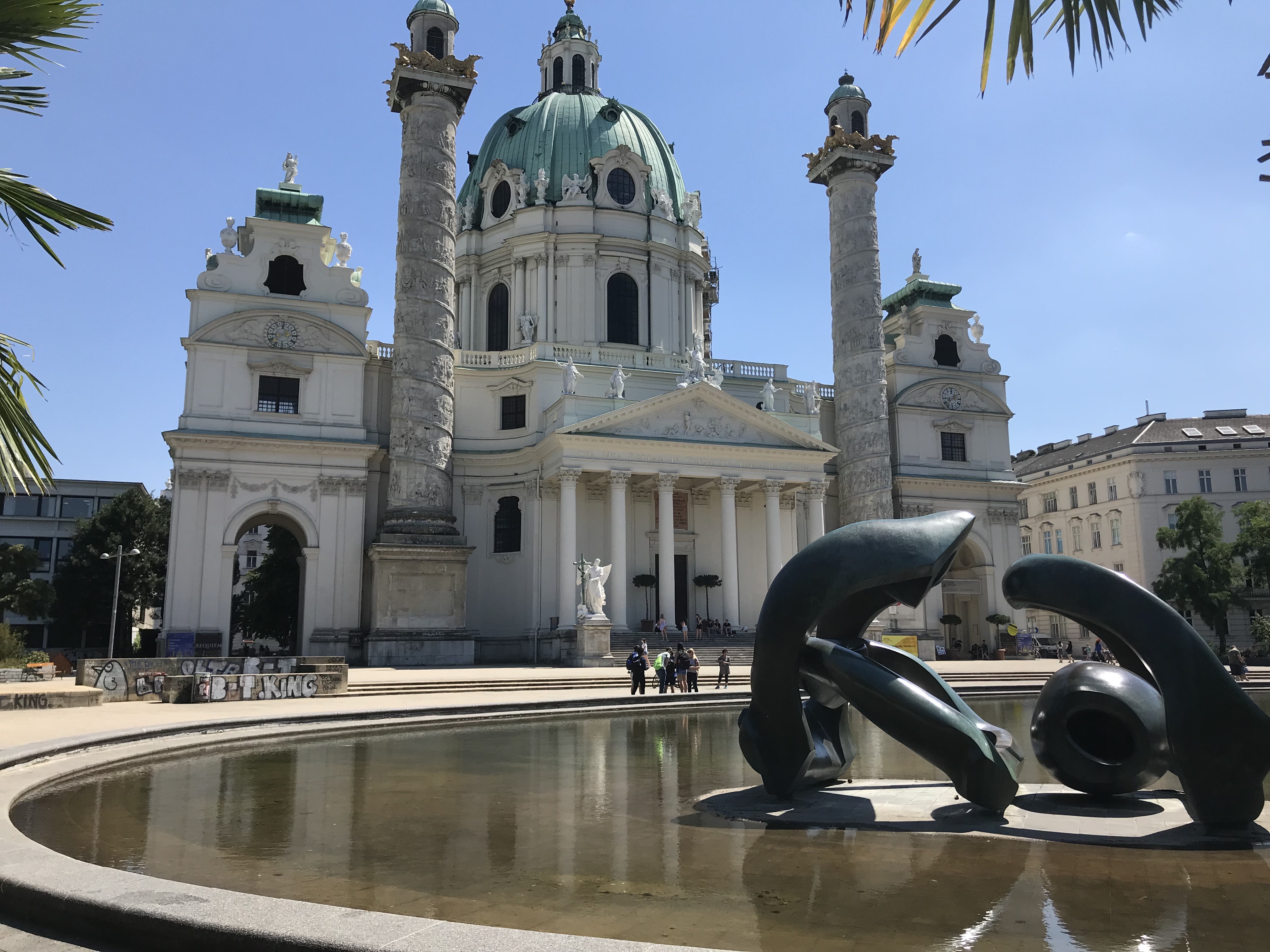
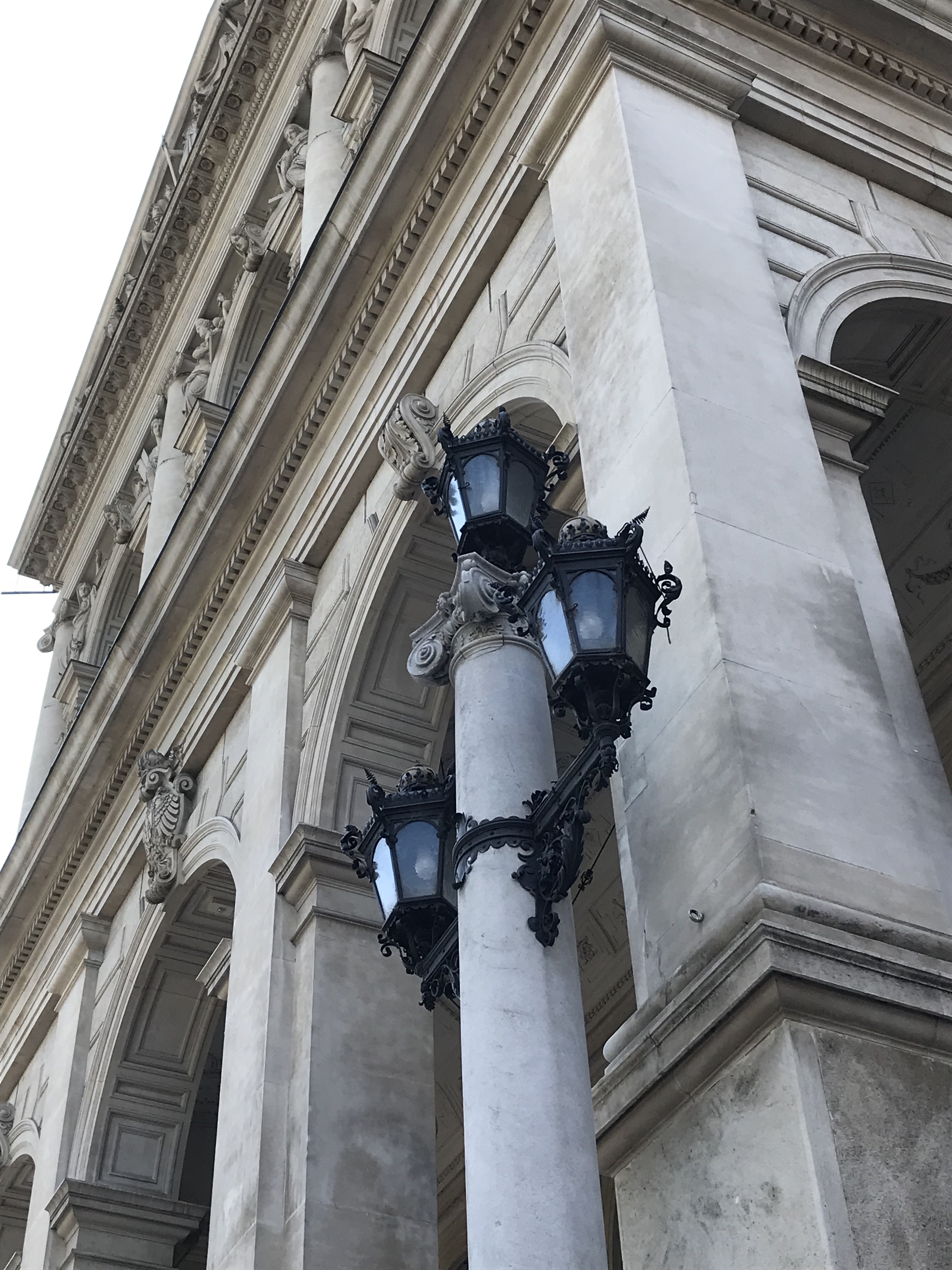
From there it was a short walk to the University of Vienna, otherwise known as Universität Wien. Besides the obvious beauty of the building, I again noticed a quiet and carefree atmosphere portrayed by those who regularly use the building. In the courtyard in the center of the building, students lounged in the shade, working on homework or perhaps just relaxing, seemingly unaffected by the grand hallways and intricate artwork crafted into the building. After walking around the building for a bit jealous of the students who attended this school, we departed for the day.
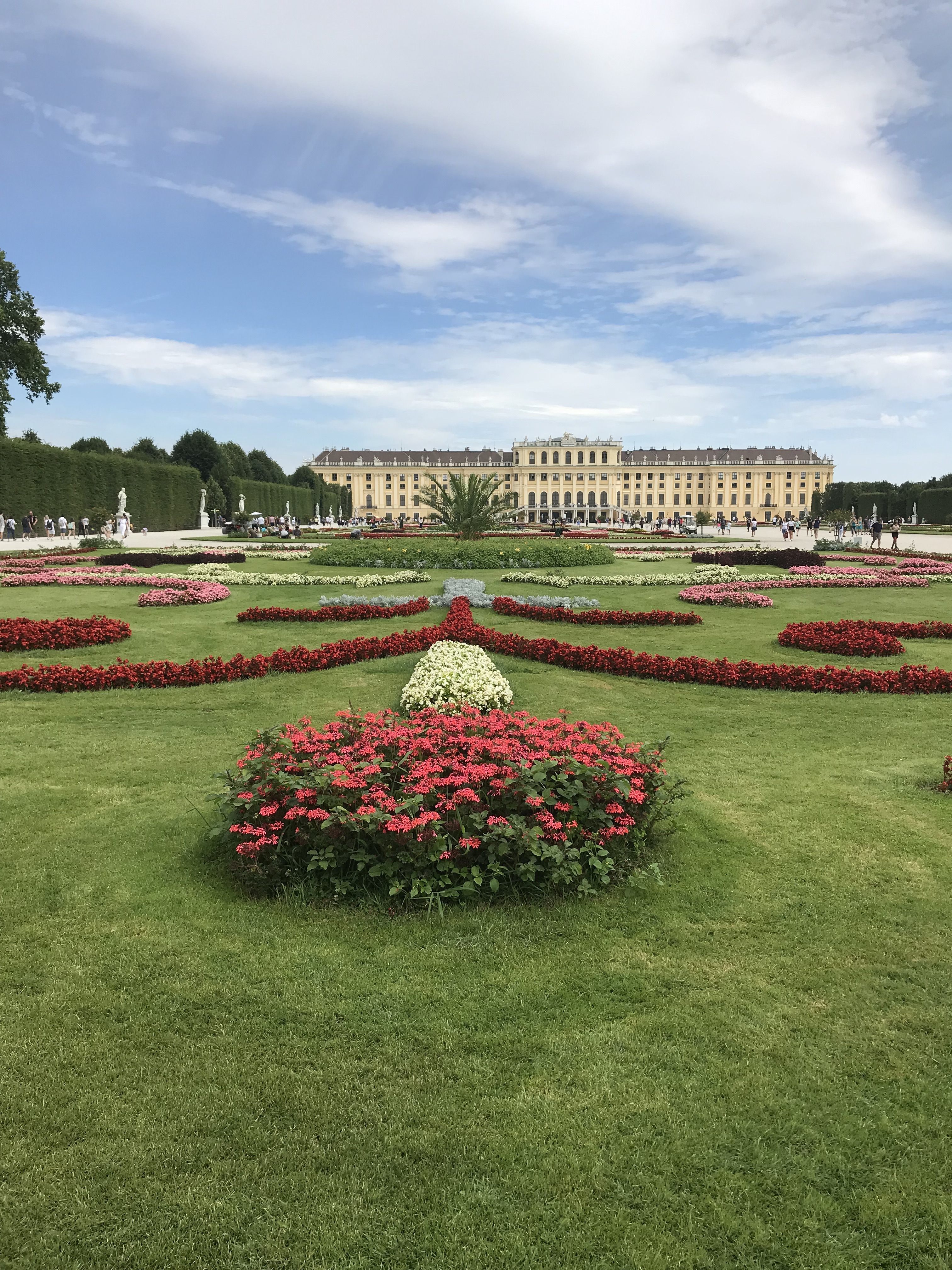
We continued our CAT assignment the following day with a trip to the Schönbrunn Palace. On the guided tour, one particular piece of information that stood out to me was the fact that the Hofburg rulers designed their palace in a way to make it seem more approachable to the public and those they rule over. In particular, when designing the palace, the future residents wanted to design it in a conservative way for this reason and also to save money. Now considering the degree of extravagance of this palace, I find that a bit ironic. Not only was the inside of the palace extravagantly furnished and designed with gold detailing to mimic the Palace of Versailles, but the grounds and the palace gardens seemed to extend for acres and acres. Unlike many of the other places we visited on this CAT, this palace was heavily populated with tourists however the ambiance understandably suggested a higher respect for this attraction. This was one of my favorite places visited on this assignment, and because my friends and I were so eager to see these gardens, we missed the rest of our group’s departure from the palace, leading us on quite a fun adventure to find our way back to the city center (we eventually found our way back a few hours later haha).
This is an example post, originally published as part of Blogging University. Enroll in one of our ten programs, and start your blog right.
You’re going to publish a post today. Don’t worry about how your blog looks. Don’t worry if you haven’t given it a name yet, or you’re feeling overwhelmed. Just click the “New Post” button, and tell us why you’re here.
Why do this?
The post can be short or long, a personal intro to your life or a bloggy mission statement, a manifesto for the future or a simple outline of your the types of things you hope to publish.
To help you get started, here are a few questions:
You’re not locked into any of this; one of the wonderful things about blogs is how they constantly evolve as we learn, grow, and interact with one another — but it’s good to know where and why you started, and articulating your goals may just give you a few other post ideas.
Can’t think how to get started? Just write the first thing that pops into your head. Anne Lamott, author of a book on writing we love, says that you need to give yourself permission to write a “crappy first draft”. Anne makes a great point — just start writing, and worry about editing it later.
When you’re ready to publish, give your post three to five tags that describe your blog’s focus — writing, photography, fiction, parenting, food, cars, movies, sports, whatever. These tags will help others who care about your topics find you in the Reader. Make sure one of the tags is “zerotohero,” so other new bloggers can find you, too.

 Alyssa's Architectural Adventures